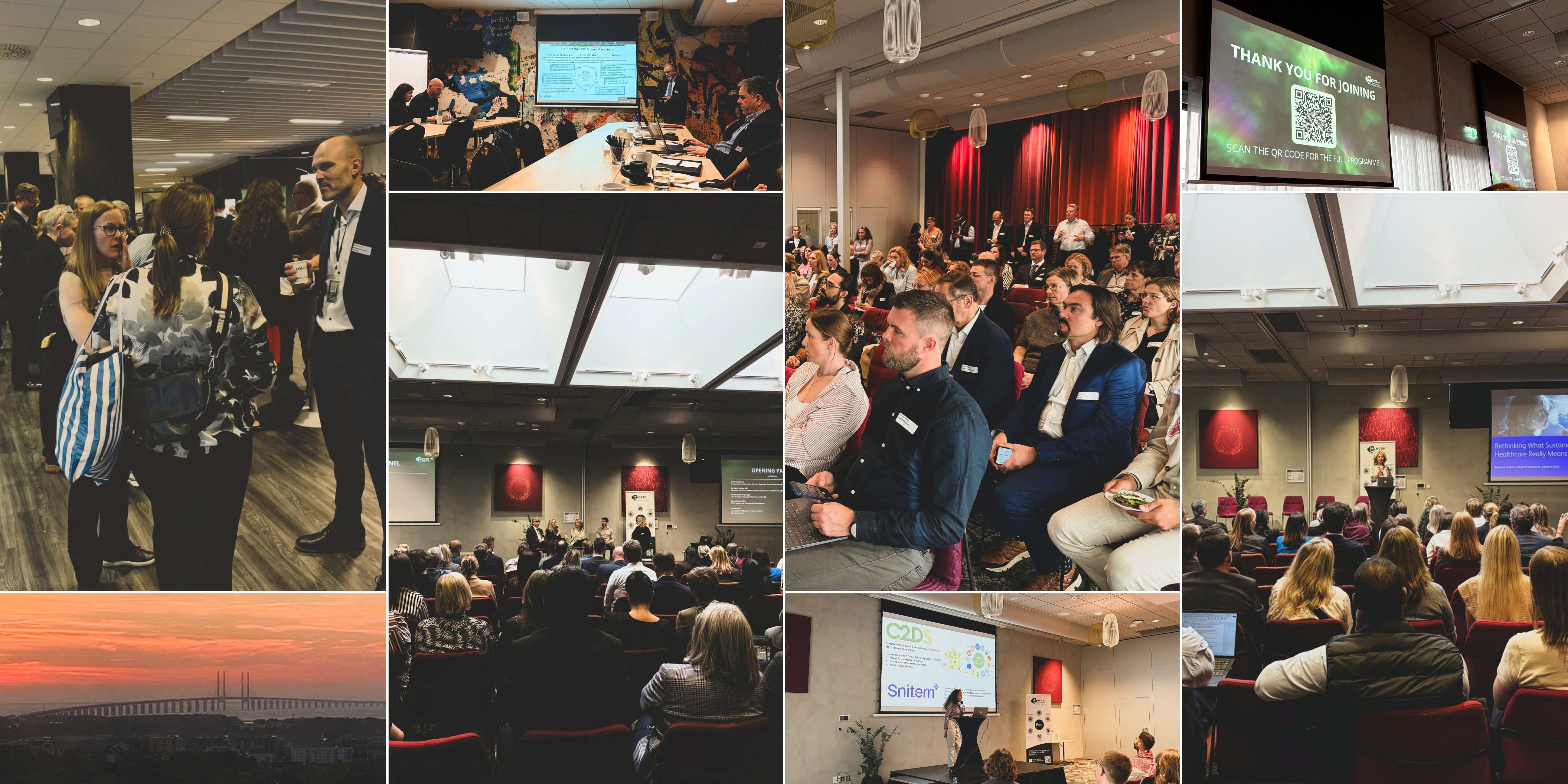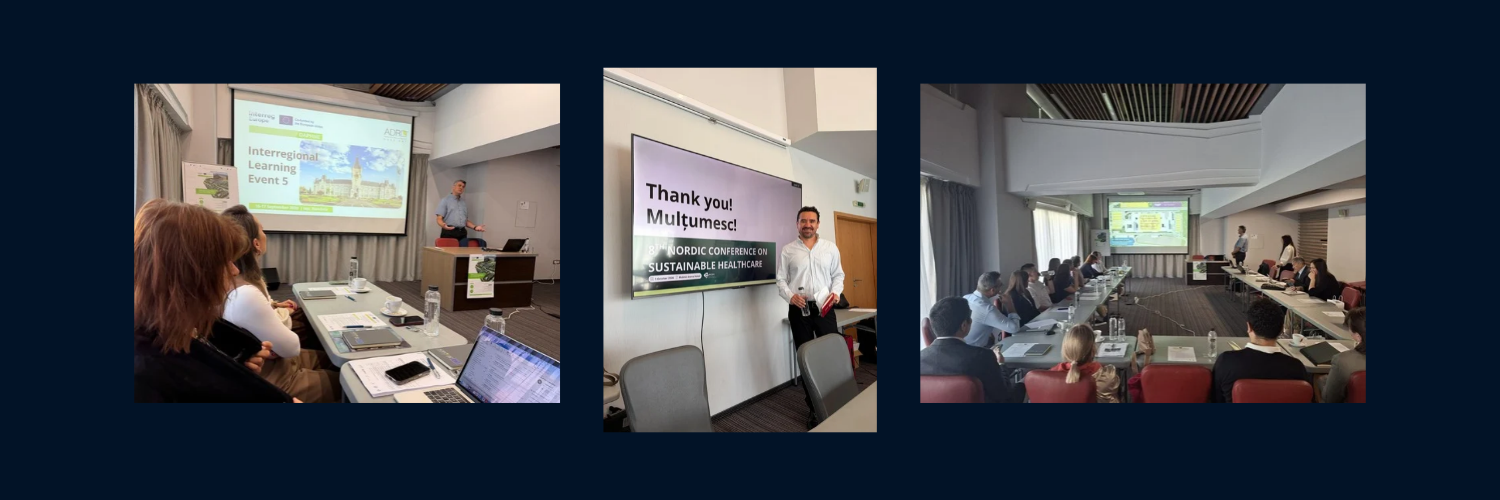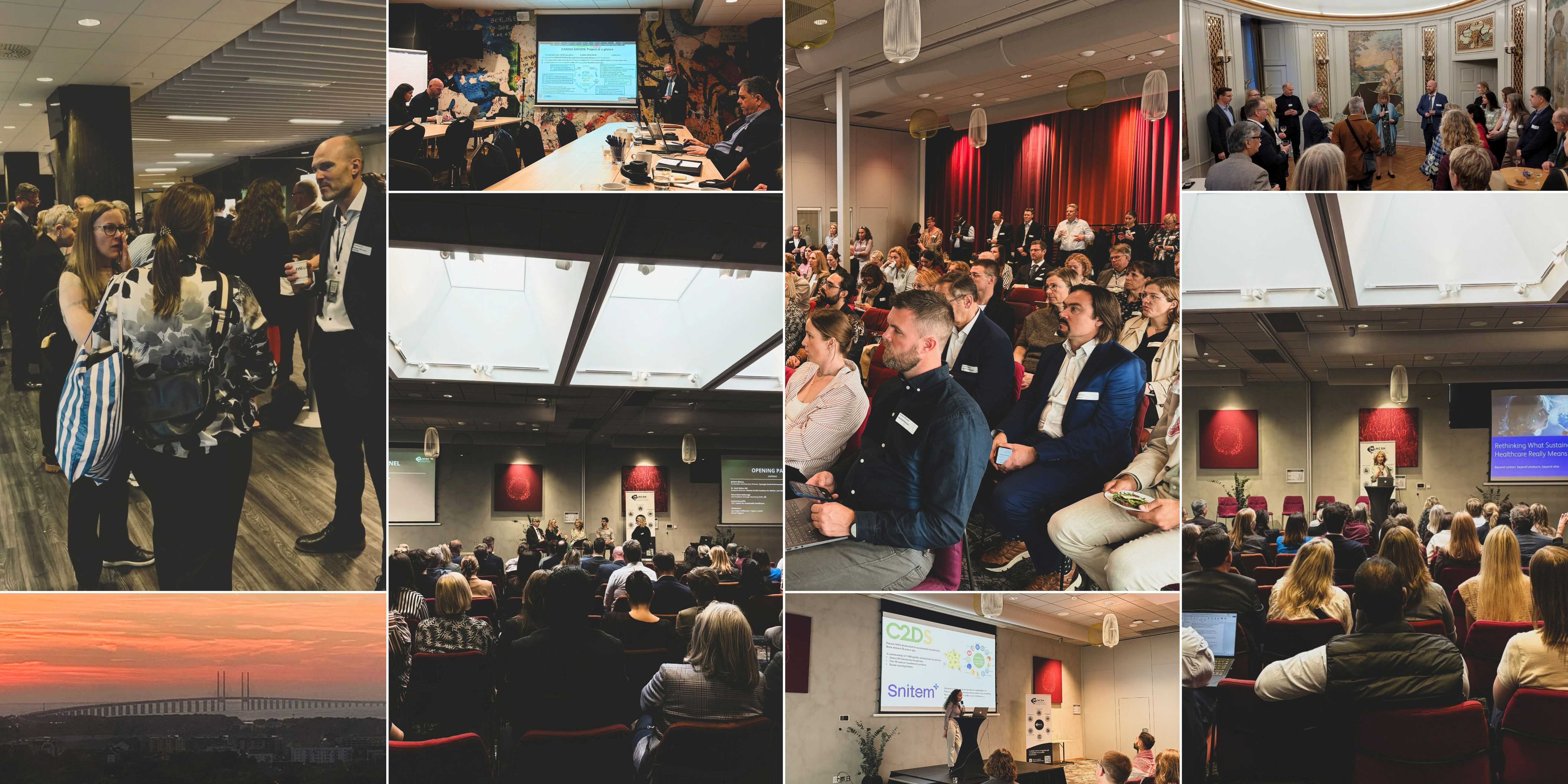
Sustainable Healthcare Week 2026 brought together healthcare professionals, policymakers, researchers, procurers and industry in Malmö to exchange experiences, discuss current challenges and strengthen collaboration for more sustainable healthcare.
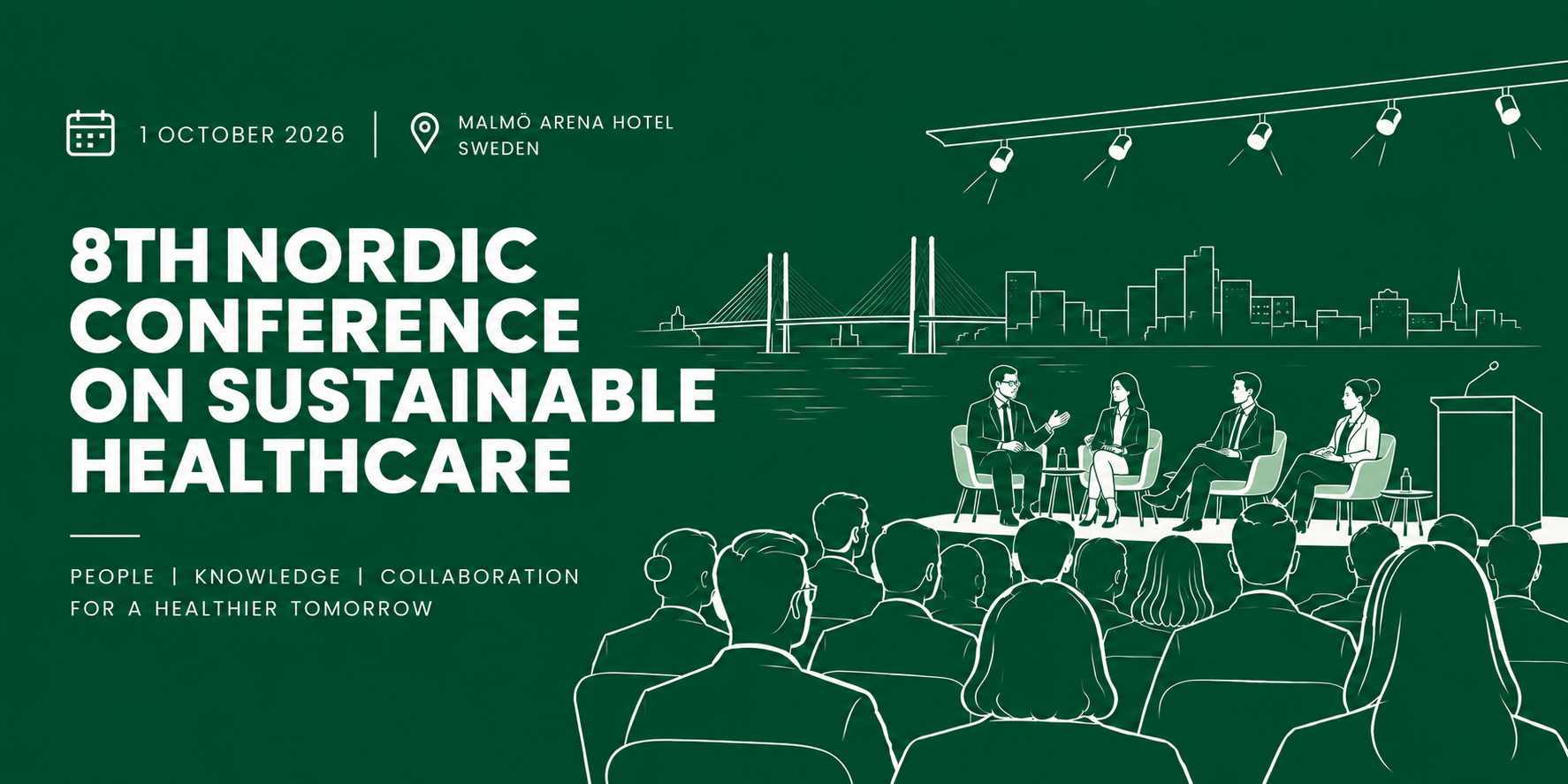
At the centre of the week was the 8th Nordic Conference on Sustainable Healthcare, held on 1 October at Malmö Arena Hotel. More than 250 participants joined the main conference, with additional activities and side events taking place throughout the week.
500 participants across the week | 25 + countries | 26 speakers and 7 moderators | 10 side events | 20 exhibitors
Key takeaways from the conference
From prevention and procurement to resilience, safer materials and investment, the discussions in Malmö reflected how sustainable healthcare is moving from ambition towards implementation.
A recurring message was that sustainability cannot be treated as a separate environmental agenda. Fiona Garín Mc Donagh, BD, connected sustainability with patient outcomes, efficiency and resilience, summarising the opportunity as not simply greener healthcare, but better healthcare. Rachel Stancliffe, Centre for Sustainable Healthcare, brought this into clinical practice, highlighting the need to redesign care rather than simply reduce the carbon footprint of existing systems. Prevention, patient self-care, lean service delivery and lower-carbon alternatives can all contribute to healthcare that delivers better outcomes with fewer environmental, social and financial costs.
This broader understanding of prevention was also reflected by Emma Hellqvist, Mölnlycke, who explored how preventing patient harm, workforce strain, inefficiencies and unnecessary resource use can benefit patients and healthcare professionals while reducing additional treatment, materials, costs and emissions.
Procurement was another strong thread throughout the conference. Elisa Frenz, Health Proc Europe, presented the Alliance for Procurement Impact, highlighting how collective demand, shared standards and coordinated action between buyers and industry can help drive market change and build more resilient and sustainable healthcare supply chains. Maria Lavonen, Serres, brought an industry perspective to the discussion, showing the importance of looking at sustainability together with clinical requirements, patient safety, workflow efficiency and cost. From the buyer perspective, Maiken Pollestad Sele, Norwegian Hospital Procurement Trust, presented the Nordic Joint Statement on Sustainable and Ethical Healthcare Procurement and the work underway to strengthen low-carbon procurement, improve product-level climate data and phase out chemicals of concern.
The question of safer materials continued in the de-toxifying discussions. Anna Åkerberg, Region Skåne, presented how environmental requirements and public procurement can be used to address hazardous substances, while Akif Görgülü, Médecins Sans Frontières (MSF) brought the perspective of medical products, chemicals of concern and sustainable procurement in humanitarian healthcare. Véronique Molières, C2DS, presented work on evaluating the environmental value of medical devices, including criteria covering carbon, water, waste and toxicity – illustrating the growing need for better information to support healthcare purchasing decisions.
Sustainability was also closely connected to resilience and preparedness. Agnes Björn, Region Stockholm, highlighted priorities including reducing low-impact care and material use, transitioning towards products with lower climate impact and strengthening sustainability and resilience together. Her presentation also pointed to the importance of partnerships that can finance transformation and scale solutions that are already working.
The international perspectives throughout the day reinforced the importance of collaboration across borders. Dr Sunil Mehra, MAMTA Health Institute for Mother and Child, explored opportunities to connect Nordic sustainable healthcare innovation with India's healthcare system, emphasising the importance of adapting solutions to local needs, testing them in real-world settings and building evidence before scaling. Jérôme Ribesse, Synergie Santé Environnement, brought experience from Canada and highlighted the value of sharing approaches to climate resilience, decarbonisation and sustainable practices across regions and with global suppliers.
The closing discussions brought many of these perspectives together around the question of how change can be accelerated. Martin Uriarte Asteinza, European Commission, highlighted the need to engage across the entire healthcare value chain, harmonise frameworks and metrics, stimulate green innovation procurement and invest in solutions that can be tested and scaled. The European Investment Bank (EIB) added the investment perspective, reflecting the importance of financing in enabling the transition towards more sustainable healthcare.
Taken together, the discussions showed how closely these challenges are connected.
-Prevention affects resource use.
-Procurement can influence markets and materials.
-Circularity can strengthen resilience.
-Research and investment can help solutions move from ideas to implementation.
Sustainable healthcare therefore requires action across the entire ecosystem – from clinical practice and procurement to industry, policy, research and finance.
A special thank you also goes to Ann Højer Hoffmann, Danish Regions, for guiding key discussions throughout the conference and helping bring together perspectives from across the healthcare ecosystem.
Beyond the main conference
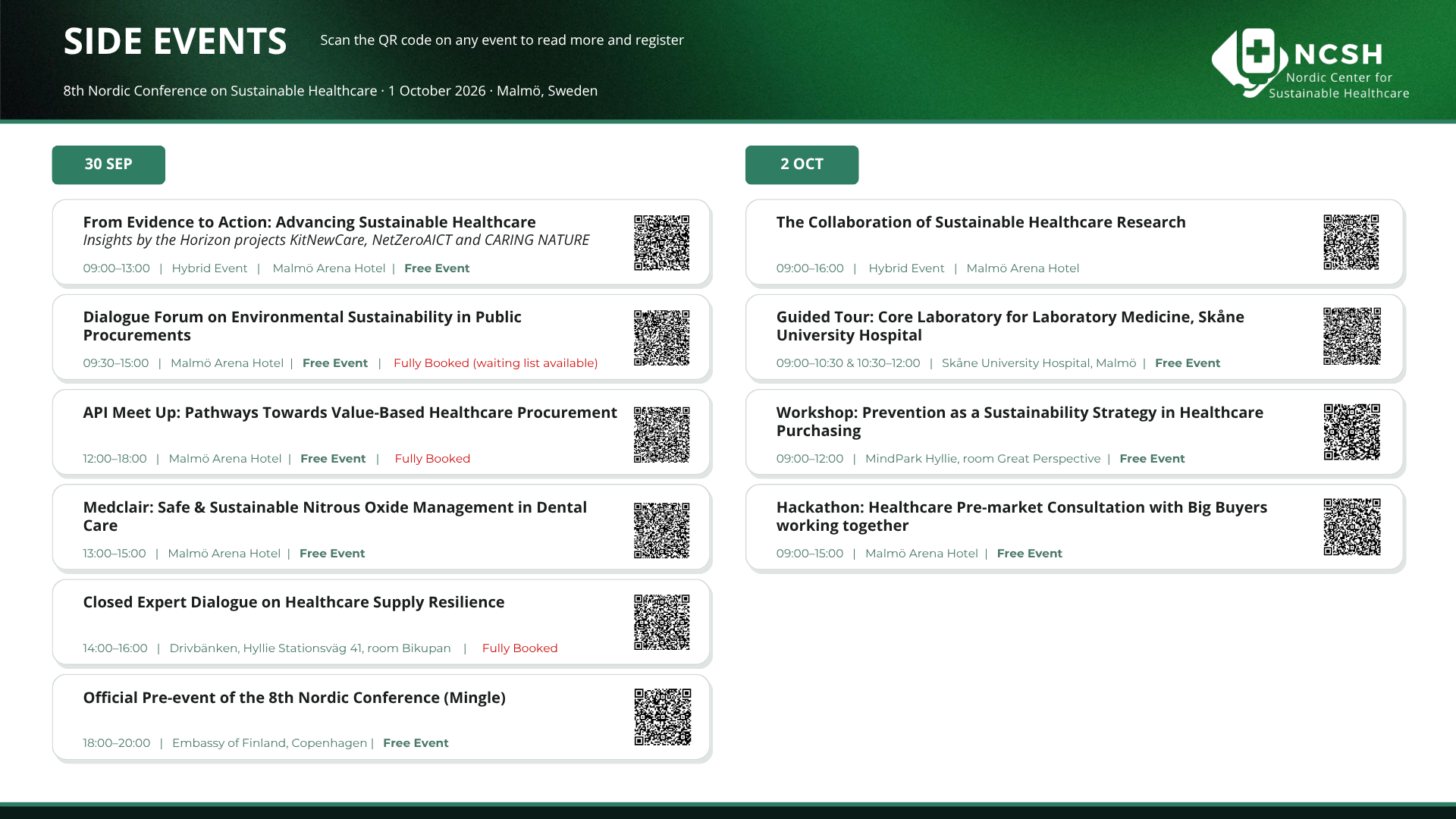
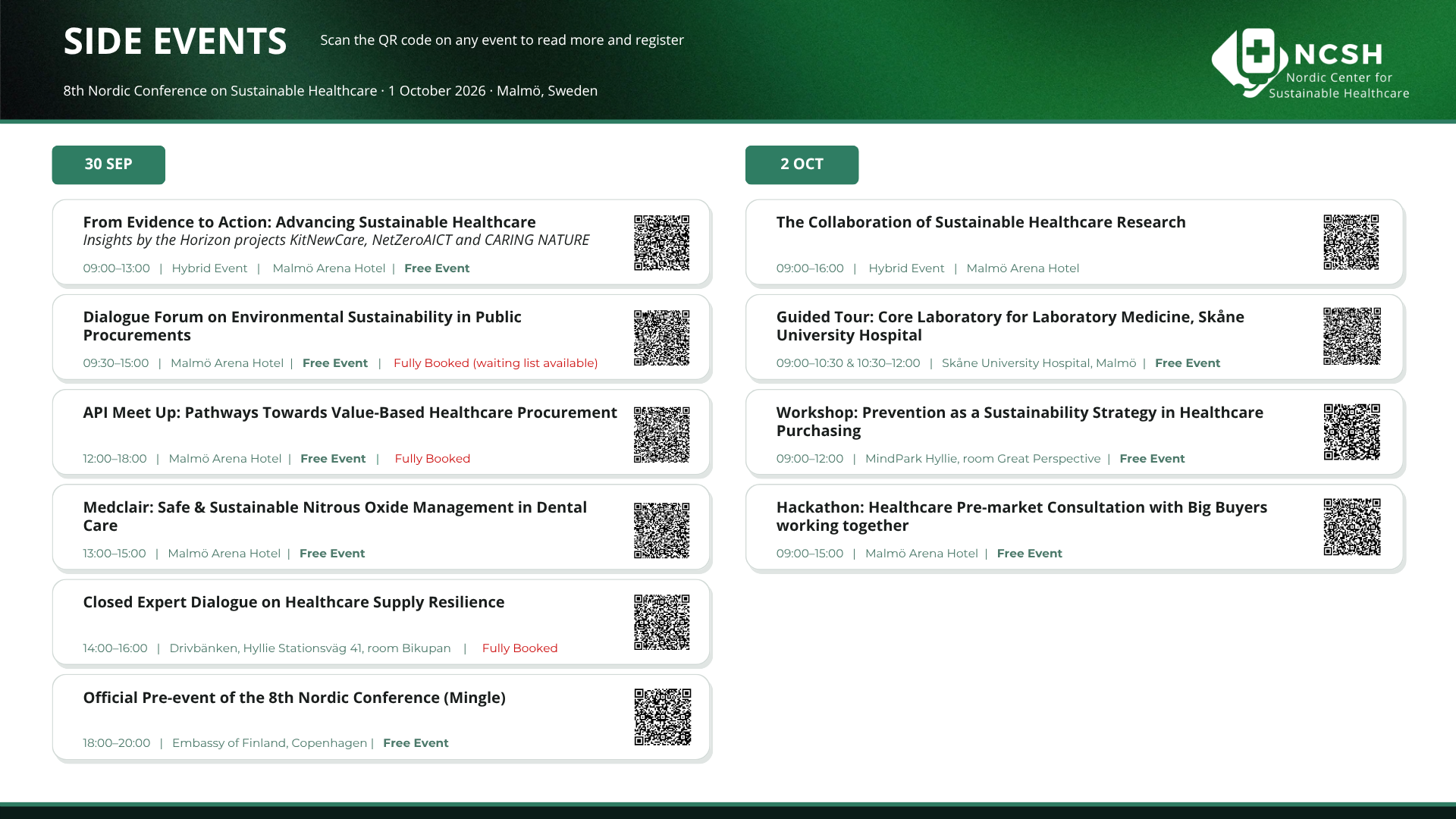
Sustainable Healthcare Week included 10 side events, creating additional opportunities to explore specific challenges and solutions in greater depth.
The week also included an official pre-event hosted by the Embassy of Finland in Copenhagen on 30 September, bringing together participants ahead of the main conference and providing an opportunity to connect and exchange perspectives in a more informal setting.
The programme covered areas including sustainable public procurement, value-based healthcare procurement, healthcare supply resilience, prevention, research and innovation, climate and environmental sustainability, and pre-market consultation.
Together with the main conference, these activities resulted in more than 500 participants across the week, with people representing 25+ countries. The different formats allowed participants to move beyond the main stage, meet in smaller groups, exchange experiences and develop conversations and collaborations around specific areas of sustainable healthcare.
Bringing sustainable healthcare research together
The week continued on 2 October with the first Collaboration of Sustainable Healthcare Research, held at Malmö Arena Hotel and online.
The initiative brings together researchers working within sustainable healthcare, with a founding committee representing Trinity College Dublin, Yale University, Harvard University and the Sustainable Healthcare Coalition, providing scientific rigour and oversight for the Collaboration.
The first meeting featured presentations and discussions covering topics including prevention, life-cycle assessment, circular economy, single-use products and methods for measuring environmental impact, creating a dedicated forum for researchers to exchange knowledge and strengthen collaboration within the field.
A new international collaboration
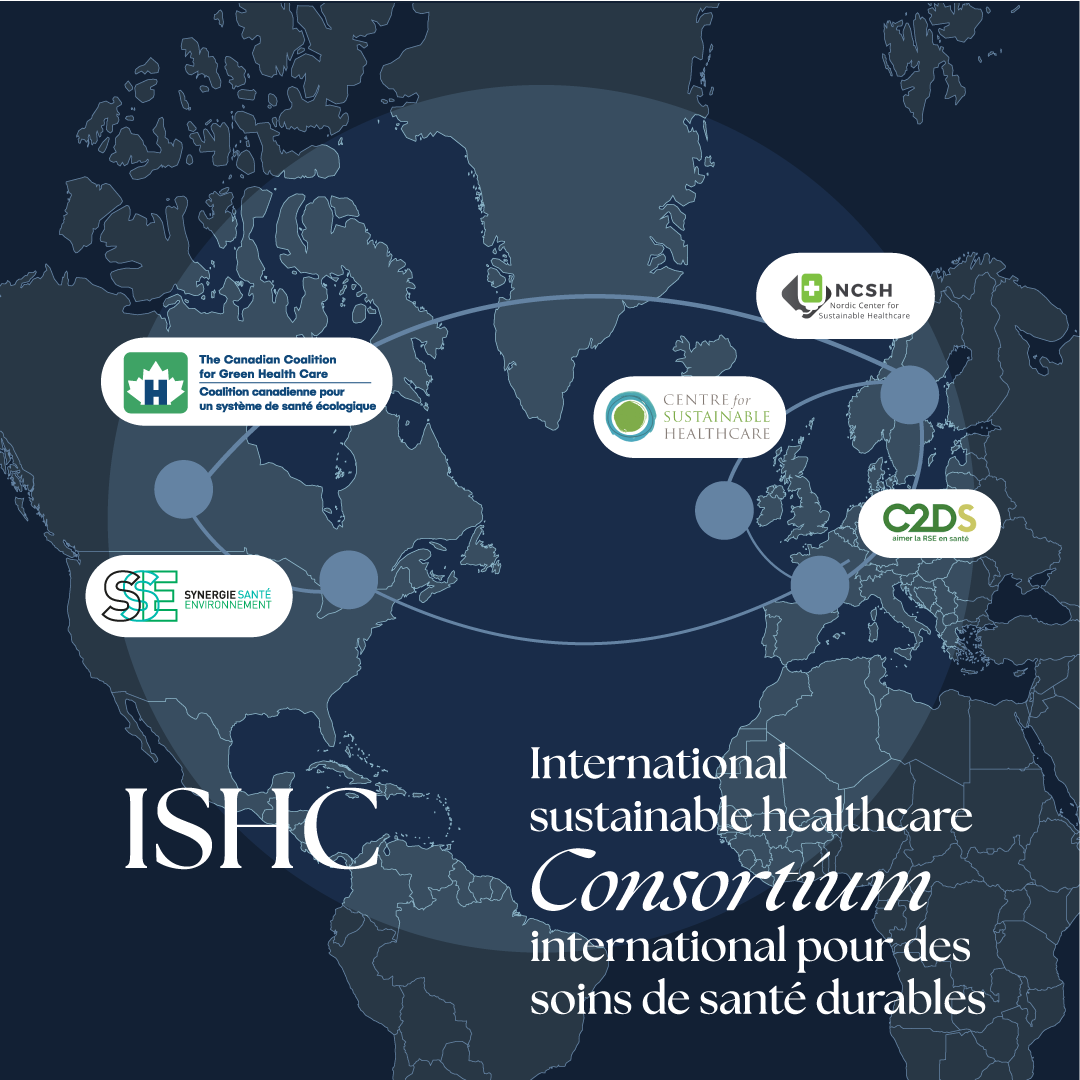
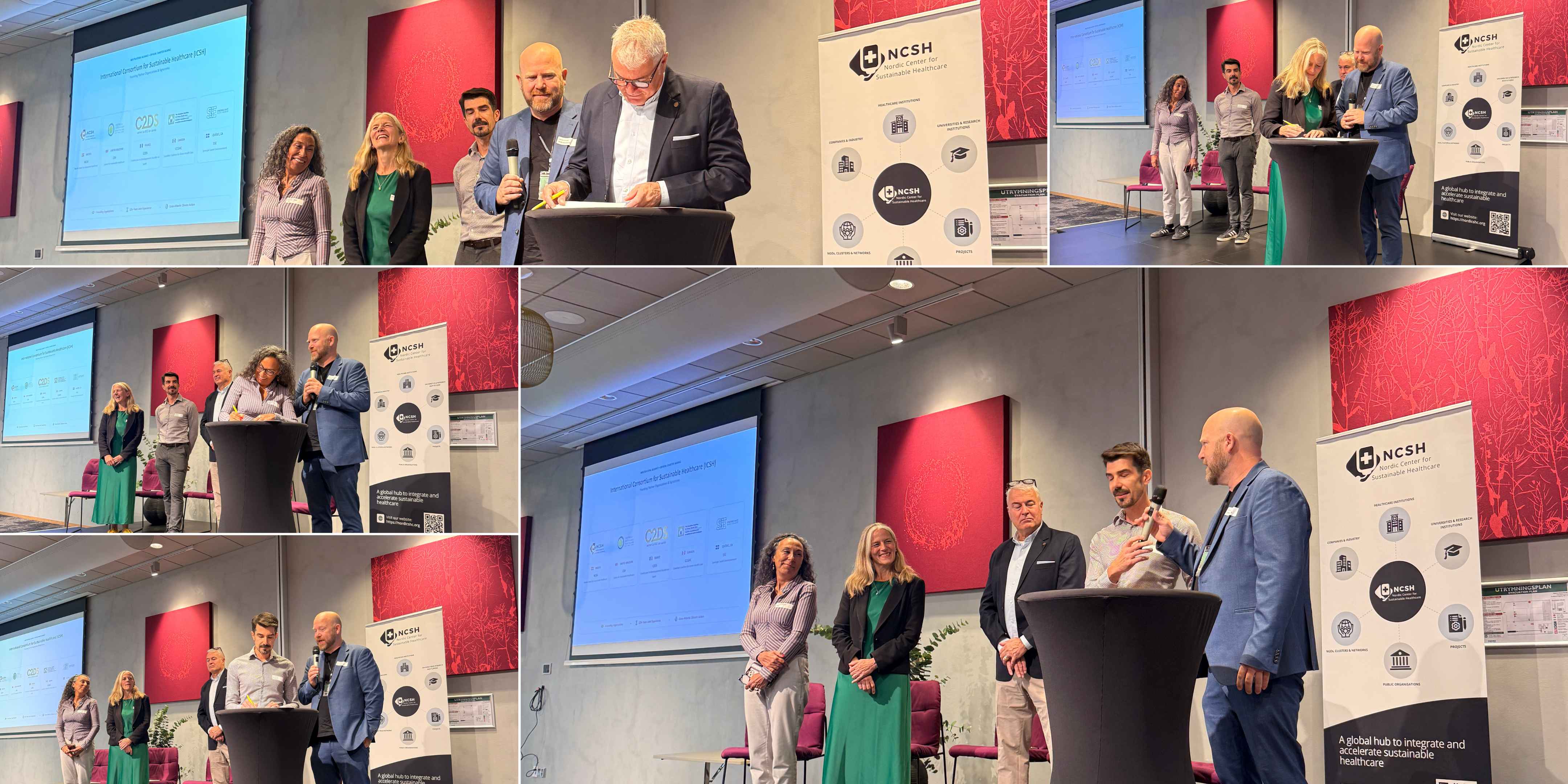
One important milestone during Sustainable Healthcare Week was the official signing of charter for the International Consortium for Sustainable Healthcare (ICSH).
Five founding organisations – the Nordic Center for Sustainable Healthcare (NCSH), Centre for Sustainable Healthcare (CSH), C2DS, Canadian Coalition for Green Health Care (CCGHC), and Synergie Santé Environnement (SSE) – came together to formalise the new international collaboration.
Connecting organisations from Sweden, the United Kingdom, France and Canada, the consortium creates a platform for continued international exchange and collaboration around sustainable healthcare.
Thank you for Sustainable Healthcare Week 2026
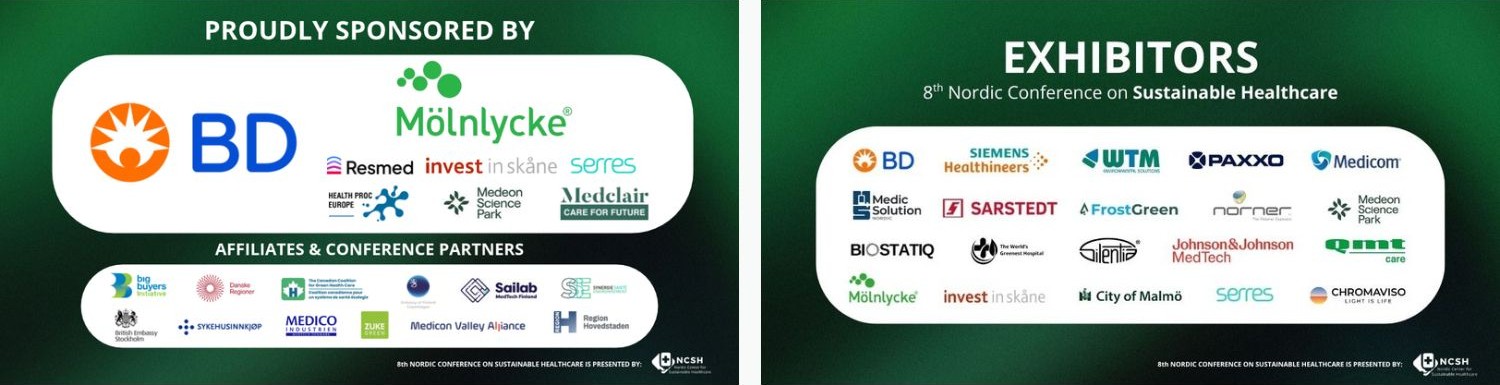
A sincere thank you to all participants, speakers, moderators, sponsors, exhibitors, partners and organisers who contributed to Sustainable Healthcare Week 2026.
From the discussions on stage and exchanges throughout the side events to new research connections and international collaboration, the week demonstrated what can happen when different parts of the healthcare ecosystem come together around a shared challenge.
Sustainable Healthcare Week 2026 may be over, but the conversations, connections and collaborations that started in Malmö continue.
We look forward to continuing the work together.