eHealth2020 - International conference 2020

On October 1, the Finnish society of Telemedicine is arranging #eHealth2020 – International Conference which this year is fully digital. Johannes Brundin, Project manager at Nordic Center for Sustainable Healthcare will give a presentation with the topic “Sustainable healthcare progress in the Nordics matters globally". Read more below.


 #eHealth2020 – International Conference is transforming to fully virtual conference on 1st October 2020

Due to concerns regarding the spread of COVID-19 disease the Finnish Society of Telemedicine and eHealth has decided to transform physical face-to-face conference to virtual conference.

New date for the conference is 1st October 2020. There are limited free tickets available.

Visit Website

Registration is now open and free-of-charge for 200 participants.

Register now to ensure your virtual seat
https://ehealthconference2020.dealroomevents.com/

Check out the conference program (pdf)

#eHealth2020 International Conference & The 25th Finnish National Conference on Telemedicine and Health, "From Dream to Reality" 1st October 2020, Virtual Conference.
The 2020 conference will cover themes from updating the knowledge about International and Nordic eHealth trends and solutions. The program is aimed at healthcare and other professionals and service providers. The conference offers unique meeting place and new information to physicians, nursing staff as well as to responsible persons for management, planning and education.

Conference topics:

·         Nordic digital experience

·         Data lakes or leaks

·         Personalized care - thank you!

·         Digital competence in health

·         Test beds and medical devices - pros and cons

·         Citizens as user of digital health

·         eHealth and eWelfare in practice

·         Co-creation orchestration


This article is written by or on behalf of a member of the network and any statements, claims and opinions are theirs and not necessarily NCSH's.


Health100: Online one-day unconference

Our member & partner Upgraded Finland is on October 7th arranging Health100, a one-day online unconference for the Nordic health scene. 


Health100

Health100 2020

Health100 is an interactive event with the spirit of an unconference. The main focus of the event is the covid-19 outbreak and the changes it brought to the Global Health. All attendees will have a chance to bring something to the table for the covid-19 discussion! The interactive Online Tool used for the event allows us to imitate all elements of a regular in-person event. 

More Information & Registration

Attendees

We will have around 1000 people joining the virtual event. You definitely should attend, if you are one of the following:

- Professionals of the Healthcare Industry who realizes the need of innovation in the modern world,

- Clinicians who believes that the processes we have in the Healthcare right now should be improved,

- Politician or policy makers who wants to know firsthand what is happening in modern Health,

- Health startup founders with brilliant ideas or ready-products, having obstacles on the way to delivery,

- Investors who realises that Health is the most important area to invest in right now,

- Researchers / academics who wants to connect to the practitioners and tell about your recent findings,

- Corporate representatives who doesn´t want to stay aside,

- Representatives of Tech with ideas on how to improve modern healthcare


The program will include 3 high-end keynotes, 30 round-tables with the best experts in the field, direct matchmaking and more. As an attendee you will get an opportunity to connect to the relevant people of the Global Health, information about changes in the Health Industry firsthand, a chance to co-create the Global Health Resolution - document that will summarize all the discussions held during the event, and that will be delivered to relevant decision-making bodies.


This article is written by or on behalf of a member of the network and any statements, claims and opinions are theirs and not necessarily NCSH's.


Seminar with University of Skövde: Sustainable Healthcare

On October 23, the University of Skövde is arranging a seminar in Sustainable Healthcare together with Skaraborg Hospital. Daniel Eriksson, Founder and CEO of Nordic Center for Sustainable Healthcare, will start the day off with his presentation "Sustainable healthcare - a new industry, a new area of ​​innovation, a new area of ​​research". Read more below.


Please observe that this seminar will be held in Swedish. 


Högskolan i Skövde 2011En hållbar sjukvård

Efter förra årets uppskattade seminarium ”Framtidens vårdbehov – tillsammans mot smarta digitala arbetssätt” bjuder Högskolan i Skövde och Skaraborgs Sjukhus in till ännu en förmiddag med föreläsningar under temat ”En hållbar sjukvård”.

Det finns möjlighet att delta på plats men också digitalt via länk. 

Program

08:30 Inledning, prorektor Lena Mårtensson, Högskolan i Skövde.

08:40 Daniel Eriksson, Nordic Center for Sustainable Healthcare om "Hållbar sjukvård – en ny bransch, ett nytt innovationsområde, ett nytt forskningsfält".

09:25 Ninitha Maivorsdotter, forskningsledare DHEAR (Digital HEAlth Research) om "samverkan av digitala lösningar och mänskliga möten på sätt som stödjer välbefinnande och trygghet".

09:35 Caroline Bäckström, lektor i omvårdnad och projektledare "Digitalt Föräldrarstöd', om utveckling av ett digitalt verktyg för blivande föräldrar 'Förlossningsresan".

09:55 Paus.

10:10 Thomas Andersson, professor i företagsekonomi och Anna Kjellsdotter, forskningsledare Skaraborgs sjukhus om "Innovationssystemet för ett sjukhus – att förstå möjligheter och hinder för innovation i sjukvård".

10:30 Johan Svensson, överläkare SkaS och professor internmedicin Sahlgrenska Akademien och Ulla Andin, överläkare från Skaraborgs Sjukhus berättar om projektet DECI-"Digital vårdmodell vid kognitiv nedsättning": en 3-årig prospektiv, randomiserad multicenter-studie där olika digifysiska vårdmodeller för patienter med kognitiv nedsättning utvecklades, testades och utvärderades.

11:05 Homa Tajsharghi, professor i biomedicin och Oskar MacGregor, lektor i kognitiv neurovetenskap om ”Änglamakare: Autosomala recessiva sjukdomar, genetiska tester och etik”.

11:25 Jessica Lindblom, biträdande professor i informationsteknologi och Ari Kolbeinsson, lektor i integrerad produktutveckling om "virtuell ergonomi inom hälso- och sjukvård".

11:45 Afrouz Behboudi, professor i biomedicin om "kvalitetssäkring av biobankprover".

12:05 Avslutning, Jörgen Thorn, direktör Skaraborgs Sjukhus.


Anmäl dig till seminariet "En hållbar sjukvård"

Till Hemsida och Registrering


Danish Online Living Lab - Sustainable Hospitals

Our member Region Midtjylland in Denmark is together with partners arranging this Living Lab event on September 24. Read more below. 


24 September 2020

CDRDanish Online Living Lab - Sustainable Hospitals

An inspiring plenary session, followed by targeted online 1:1 meetings that promises knowledge gain and new business contacts.

The online match-making event brings together companies (buyers as well as suppliers) from a large number of European countries. This is your unique opportunity to generate new business contacts and contracts. 

The key focus of this matchmaking event is centered around the Living Labs concept. For this event the focus is on Sustainability in Hospitals - and more specific; ENERGY and RESOURCE Efficiency. The challenge owners are looking for innovative companies, ideas, technologies and methodologies in order to identify and form new partnerships within the specified challenge areas. Participate to get in direct contact with the project developers and pitch your innovative solutions during targeted one-on-one B2B meetings.

The model is time and cost efficient, and the end result is more business partnerships, as well as networking across borders, making Northern Connections! The meetings will take place online, in individual 1:1 digital meeting rooms, using the B2Match software, and your specific schedule will be automatically arranged in advance. By means of this website, create a profile in the easy-to-use softeware, state your interests, areas of expertise and start exploring the other registered participants profiles, in the search for new business partnerships and meetings.

Link to website & Registration

Why participate?

  • As purchaser - find qualified European suppliers during effective 1:1 meetings
  • As market/sales manager - find new European customers
  • As product developer - find partners to discuss new technology and innovative solutions

How can you benefit from this online event?

  • Showcase your products, projects, services or business needs to event participants
  • Initiate and arrange promising pre-scheduled online 1:1 meetings at the event
  • Generate fresh leads and meet new contacts in a time and cost-efficient way
  • Stay one step ahead of your competitors by being seen and visibly present at the event

The Top 5 objectives to make your participation a success:

  • Meet new partners and customers
  • Discover new products & services
  • Prepare purchases or projects
  • Meet new suppliers
  • Get information about latest's trends regarding energy and ressource consumption

This article is written by or on behalf of a member of the network and any statements, claims and opinions are theirs and not necessarily NCSH's.


Hospital BIM Open 2020 - Virtual Conference 28-29 October

In October, our member buildingSMART Finland will arrange a two-day virtual conference. As part of our collaboration, NCSH will attend the conference and give a presentation during one of the sessions. Members of NCSH will get a discount on conference tickets until September 14. Read more below!

HBO smal

28-29 October 2020, Virtual Conference

Conference Website

Early Bird price - NCSH Members

This Early bird price is available until September 14. Please note that after the deadline prices go up to 379 EUR.


Session programme is available on our website! The programme contains 30 excellent presentations from 10 different countries.

Conference Programme

HospitalBIM open offers a unique opportunity to:

• Set up a joint way forward using BIM for healthcare building projects. 

• Share the knowledge of openBIM usage in hospital and healthcare construction projects

• Learn how to collaborate with the best digital tools and work in collaborate contract model projects (alliance, IPD)

• Experience case examples of building information management and assetmanagement improved using a BIM and machine-readable data content

• Network with healthcare building professionals 

The conference gathers together construction professionals, designers, service providers and healthcare facility owners. Two conference days will contain not only the excellent presentations and keynotes but also networking with other professionals. All this for you - first time in the world.

HospitalBIM open is part of the OpenBIM conference series organized by buildingSMART Finland and RIL.


This article is written by or on behalf of a member of the network and any statements, claims and opinions are theirs and not necessarily NCSH's.

Opragon has saved healthcare more than 10 million KWH since first installation

Our member Avidicare has written a new blogpost about their ventilation system Opragon!

Read the full blogpost here, or below.


Opragon has saved healthcare more than 10 million KWH since first installation!

We only have one planet, and it should last a long time for future generations. Everyone can do something to help reduce energy consumption and we can help you along the way towards a more sustainable hospital.

A well-documented HVAC energy saving comes from the fact that Opragon uses less energy than standard European laminar airflow (LAF) systems. It offers 30% lower cost of ownership* compared to these systems - while being superior also regarding comfort and the size of the working space!

SkC3A4rmavbild2020 07 29kl.09.26.27Still, the biggest energy saving comes from those infections that never occur. While it is much harder to calculate that saving, we know it matters in so many ways. Besides the pain and discomfort for the patient, surgical site infections extend hospital stay with many days, which obviously means lots of energy use that could have been avoided.

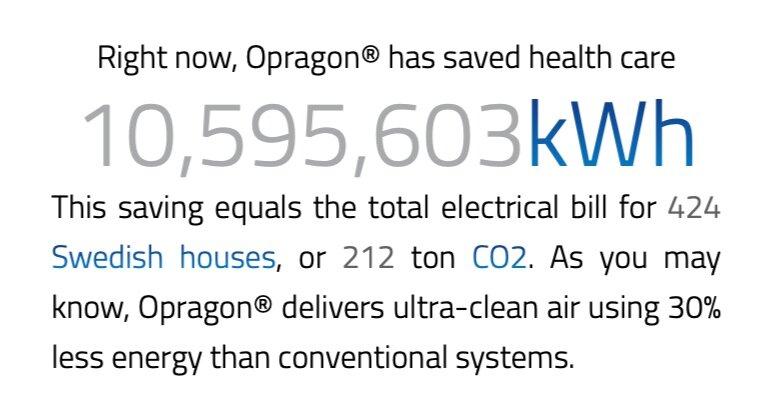
As you can see, Opragon has saved healthcare more than 10 Million kWh since the first installation. This saving is equal to 212 tons of CO2!

See our live calculator here!

By creating ultra-clean air in the whole operating room, and using less energy than other ultra-clean ventilation alternatives, Avidicare helps healthcare work Towards Zero Infections.


*article in the Journal of Hospital Infection (Oct 2017).


This article is written by or on behalf of a member of the network and any statements, claims and opinions are theirs and not necessarily NCSH's.


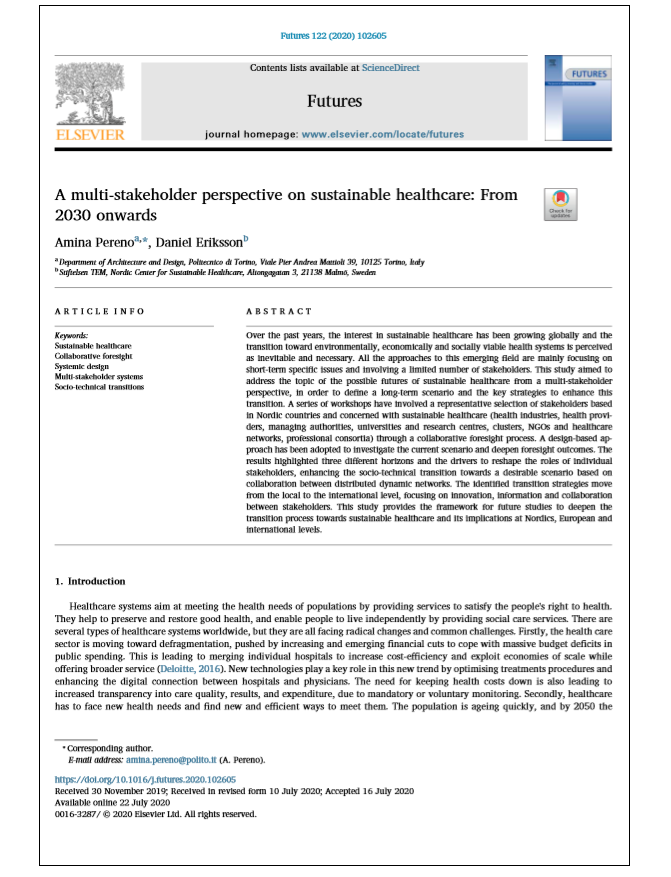
A multi-stakeholder perspective on sustainable healthcare: From 2030 onwards

This article written by Daniel Eriksson and Amina Pereno is available for free until September 16. Read the full article by clicking on the cover below.


Abstract

artikelOver the past years, the interest in sustainable healthcare has been growing globally and the transition toward environmentally, economically and socially viable health systems is perceived as inevitable and necessary. All the approaches to this emerging field are mainly focusing on short-term specific issues and involving a limited number of stakeholders. This study aimed to address the topic of the possible futures of sustainable healthcare from a multi-stakeholder perspective, in order to define a long-term scenario and the key strategies to enhance this transition. A series of workshops have involved a representative selection of stakeholders based in Nordic countries and concerned with sustainable healthcare (health industries, health providers, managing authorities, universities and research centres, clusters, NGOs and healthcare networks, professional consortia) through a collaborative foresight process. A design-based approach has been adopted to investigate the current scenario and deepen foresight outcomes. The results highlighted three different horizons and the drivers to reshape the roles of individual stakeholders, enhancing the socio-technical transition towards a desirable scenario based on collaboration between distributed dynamic networks. The identified transition strategies move from the local to the international level, focusing on innovation, information and collaboration between stakeholders. This study provides the framework for future studies to deepen the transition process towards sustainable healthcare and its implications at Nordics, European and international levels.

Cleaning Services at Randers Regional Hospital certified with the Nordic Swan Ecolabel

Press Release from our network member Randers Regional Hospital: 

Cleaning Services at Randers Regional Hospital in Denmark has been certified with the Nordic Swan Ecolabel as the first Nordic hospital
region midtjylland logo color

Sustainability has been high on the agenda at Randers Regional Hospital in recent years and the dedicated focus on green transition is now starting to pay off. As the first Nordic hospital, cleaning services have received the Nordic Swan Ecolabel.

It is not usual that a Danish hospital can boast of a Nordic record. Nevertheless, cleaning services at Randers Regional Hospital has been certified with the Nordic Swan Ecolabel as the first among the Nordic countries. This environmental certificate documents that the cleaning services comply with strict environmental requirements.

The sustainable effort by the Service Department is in line with the overall focus on climate, environment and resources in Central Denmark Region.

- Our vision is that the way we deliver health today must never compromise the possibilities for achieving a healthy life of future generations. The Ecolabel certification of the cleaning services is a great accomplishment for the hospital, and an important step on the way for all of us, says Anders Kühnau, Chairman of Central Denmark Region.

The Service Department officially received the Nordic Swan Ecolabel certificate by Martin Fabiansen, Director of Ecolabelling Denmark at a reception at the hospital 1 July 2020.

Green and clean transition – doing more, using less

The Nordic Swan Ecolabel has been given because the hospital complies with a number of strict requirements for cleaning. All cleaning products used are ecolabelled and are used in the proper doses, minimising the use of chemicals resulting in a reduction of 14.5% annually. The high quality of cleaning is maintained according to a recent external quality control (Insta 800). Moreover, the Service

Department collaborates with ecolabelled laundry services and window cleaners, and the ecolabelled products are gentler and packaging is recyclable.

- It is very positive that Randers Regional Hospital as the first Nordic hospital has chosen to certify their cleaning services with the Nordic Swan Ecolabel and in this way contributes to the green transition. The cleaning complies with strict environmental requirements and strict requirements for chemicals – for the benefit of both the environment and the staff. At the same time, the quality systems integrated in the Nordic Swan Ecolabel ensure that cleaning is also efficient, says Martin Fabiansen, Director of Ecolabelling Denmark.

While applying for the Nordic Swan Ecolabel, the hospital has increased focus on reducing the number of plastic bags and switching to smaller, thinner types of bags when possible. Within less than a year, consumption of plastics has been reduced by 16.3% equivalent to 2.4 tons. This has also positively benefitted the working environment as fewer bins must be emptied and removed when cleaning the floor.

A green role model hospital

Since 2018, sustainability has been a key word in Central Denmark Region and Randers Regional Hospital has been a green model hospital from the beginning. In addition to projects in the Service Department, other hospital departments have worked intensively testing new and sustainable work routines by focusing on e.g. waste disposal, reduced consumption, and organic food.

-Staff has embraced the green transition with great enthusiasm and an enterprising approach. We are proud to receive the Nordic Swan Ecolabel in the Service Department and we have a strong wish also to obtain this label at other hospital departments. We are all enthusiastic about green transition, says Jonas Dahl, CEO at Randers Regional Hospital.

Sustainability projects are supported by Regional Development Department in Central Denmark Region, but driven by local capacities and initiatives often come from clinicians and other staff with knowledge of the hospital and how it is run.


For further information, please contact:

Anders Kühnau (S), Chairman of the Regional Council, Central Denmark Region. Tel.: +45 2360 2768

Maria Gaden, Chief Project Manager, This email address is being protected from spambots. You need JavaScript enabled to view it., Tel +4524676105

Lisa Olufson Klæsøe, Ecolabelling Denmark. Tel.: +45 3996 6106

Jonas Dahl, CEO, Randers Regional Hospital. Tel.: +45 2974 4145

Facts: Presentation of the Nordic Swan Ecolabel, 1 July 2020

On 1 July 2020, the Service Department at Randers Regional Hospital received the Nordic Swan Ecolabel by Martin Fabiansen, CEO Ecolabelling Denmark.


What does the Nordic Swan Ecolabel mean to the Service Department?

• Ecolabelled products: Going from 50-60% to 100% of the cleaning products now used by the Service Department have a first class eco-labelling. This means that the products meet strict requirements for chemicals and strict environmental requirements. • More attention to correct dosing: There has been a focus on consumption, which has led to changes in routines and further automatic dosing. This has reduced the consumption of cleaning products with 14.5% or 379 litres annually.

•Reduced use of plastics: From May 2019 until January 2020, the Service Department has reduced the consumption of plastic bags with 16.3% equivalent to 2.4 tons of plastic.

Ecolabelling Denmark is responsible for the Nordic Swan Ecolabel and the EU-Ecolabel in Denmark. The Nordic Swan Ecolabel is the official ecolabel in the Nordics – an independent certification and one of the world's toughest and most recognised environmental certifications.

Read more at: https://www.ecolabel.dk/en


This article is written by or on behalf of a member of the network and any statements, claims and opinions are theirs and not necessarily NCSH's.
ClimaCheck - The importance of an optimised and reliable cooling-system

Our member ClimaCheck has written an article about measuring and performance analysis. Read it below!


The importance of an optimised and reliable cooling-system.

An energy efficient system is almost always a reliable and HVACR-systems (heating, ventilation, air conditioning and refrigeration) is no exception. This is something we have seen at many hospitals around the world as focus on the performance of their HVACR-systems becomes a part of their sustainability work.

By analysing the performance of a HVACR-system, it is possible to predict failures, control strategies are improved, and problems can be fixed long before they cause a failure. Refrigerant leaks will be noticed when they start not during scheduled visit (that can be months away) or when the system fails. With the right Information optimisation becomes cost effective and lead to a more energy efficient operation. Our experience is that an optimised HVACR-system consumes 10-30% less energy and have a reduced failure rate as well as a lower lifetime cost.

“Measure is to know”

The world of IoT is fast moving and there is no reason to overlook the HVACR-system. In many cases sensor data might already be collected to show temperature, pressure and in some cases even COP. However, this can bring a false security as there is a big difference between data and information.

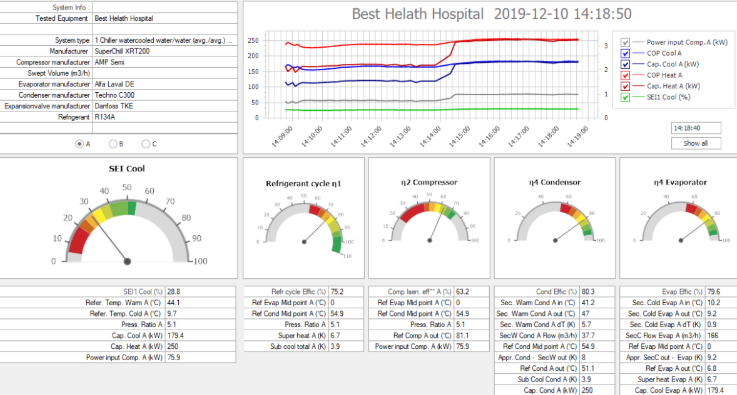
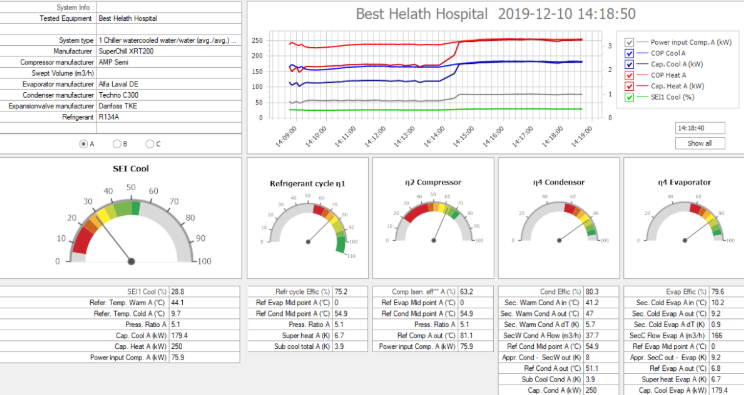
ClimaCheck have developed a unique method for performance analysis of HVACR-systems. By analysing the HVACR-systems (refrigerant process) with ClimaCheck it is possible to get detailed performance information (System Efficiency Index, SEI) on the whole system and on individual key components.

How?

The first step is to start collecting data, which is done in many cases. The second is to analyse this data to get a good understanding of the system performance and how different components perform. The third is to act on the information and do corrective/predictive measures to improve the operation.

One of the unique parts of the ClimaCheck analysis is System efficiency index (SEI), it complements “old” information like COP (that changes with conditions) with details that indicates how efficient the system is at each operating condition, and where there is a potential to save energy. SEI high-light deviations in energy consumption and performance changes in the whole systems as well as in separate components.


bild exBy using the information from the ClimaCheck analysis to work with optimisation, many hospitals have a more reliable and cost efficient HVACR-system. With more complex systems with heat recovery and/or ground storage the importance of good information on operation and performance increase. We can clearly see that an optimised (energy efficient) and well-tuned HVACR-systems improve redundancy and lower the total lifetime cost.

What can be done?

A good example is Banner Health in Arizona and the ClimaCheck the partner ETC group that recently was rewarded for “2019 Efficiency Works Largest Energy Saver: Single Project Award”. The result in this project shows the possibilities when working companywide with energy efficiency.

By integrating the ClimaCheck analyse in the existing BMS system ETC and Banner get 100% control over the HVACR-systems performance. Making it possible to work with optimisation and predictive maintenance to prevent performance drift and avoid failures.

In the first phase (10 out of 25 buildings) they are saving 3.8m $ and have reduce the energy consumption with 14 million kWh.


More information about:

To get more information about ClimaCheck and what we can do for your organisation; email Niklas

More information about the Banner project.

Read more about ETC and the award.


This article is written by or on behalf of a member of the network and any statements, claims and opinions are theirs and not necessarily NCSH's.
 

Green Furniture Concept launches the new Ascent series

Our member Green Furniture Concept makes sustainable design for public interior areas. They just launched their new Ascent series, read about it below:


Green Furniture Concept on the Ascent

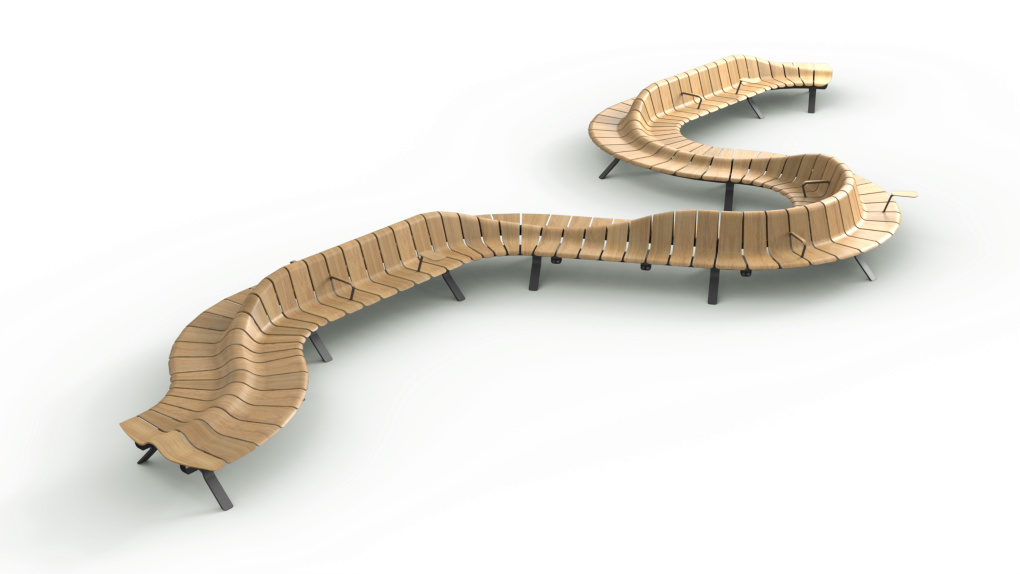
Ascent series kopiaGently curved and a triumph of three-dimensional design, Ascent is unique, placemaking,configurable and truly seamless. Airport architects are sure to recognise and celebrate the possibilities. With Ascent, the limitations of straight-backed, straight-angled gateseaters are no more. Ascent can be configured to fit the structure ofthe building,and guide people flow to gates and retail zones. Not only does Ascent create 30-40% more space than conventional seating systems, it offers first-class comfort and a high-flying airport experience to all.

As always, sustainability is a prime concern. Along with wood from certified sources, Ascent is made of post-consumer low-carbon aluminium from Hydro (the highest recycled content on the market and first-time-everused in furniture!), recycled post-consumer steel and ocean-based recycled plastic from Plastix. Ascent was designed for the circular economy–as you would expect from Green Furniture Concept.

CEO Jonathan Nilsson: “Like all our furniture, Ascent is space-saving, durable, easy to maintain and designed for passenger satisfaction. We have been thinking about how to evolve gate areas beyond the beam-seater area for a long time. Ascent is the result, and we are delighted to be presenting it for the very first time digitally and at our showroom in Malmö. Rather than launching at a large expo, we felt a smaller eventwas the only responsible choice, in the light of concerns about the coronavirus.”

Sustainability

Certified wood

The wooden components come from certified sources to support and guarantee responsible forestry

75% recycled post-consumer aluminium

The beam itself will provide one of the highest recycled content on the market, it contains a guaranteed minimumof 75% post-consumer scrap. The higher the recycled content, the lower the carbon footprint. 

+90% recycled post-consumer steel

The legs are made out of scrap metal that will be melted and turned into beautifully made legs with a powder coat finish.

100% recycled post-consumer ocean plastic

High quality recycled raw materials based on post-consumer input streams collected from the maritime industry. 


GFCFor more information, visit the website >>

or send an email: This email address is being protected from spambots. You need JavaScript enabled to view it.


This article is written by or on behalf of a member of the network and any statements, claims and opinions are theirs and not necessarily NCSH's.
Nordic BioTech Group now offers its product free of charge to the European authorities

We just got some news from our network member NordShield:

Nordic BioTech Group has created a unique antimicrobial product – sustainably produced, nontoxic and renewable. NordShield can be applied to any given surface, protecting against viruses, bacteria and mold. 


NordshieldNordic BioTech Group, a company established in Finland in 2016, has developed a revolutionary antimicrobial product, called NordShield. It is a novel non-toxic, biodegradable and renewable product on the market that protects against viruses, bacteria and mold. NordShield is of natural origin and can be used on surfaces, such as on fabrics, medical equipment or other surfaces. Research confirms the virucidal efficacy against MVA (Modified vaccina virus Ankara), used as a substitute virus for testing against enveloped viruses, including SARS, MERS and Human corona viruses.


NordShield was commercialized after more than 12 years of research and development. It revolutionizes the way antimicrobials work by providing a natural alternative to hazardous antimicrobial substances. “Our product forms a bioactive molecular net on treated surfaces, providing a safe, non-toxic and long-lasting protection against viruses, bacteria and mold,” explains the company’s CEO Kristoffer Ekman. By providing a natural alternative, NordShield can help to minimize the use of harmful substances and thus create a safer and more environmentally friendly living environment for us all.


While not specifically tested for the effectiveness against 2019-nCoV coronavirus, research conducted by Dr. Brill + Partner, Institute for Hygiene and Microbiology indicates that NordShield could be useful in the fight against the current pandemic. The product would be especially helpful when treating hospital textiles and medical safety gear such as face masks. “We believe that in the future, our innovation will be able to help slow-down and reduce the spreading of global epidemics,” says Kristoffer Ekman.


To aid the confining of the pandemic, Nordic BioTech Group has offered its water based antimicrobial fiber application free of charge to the European authorities. “The seriousness of the pandemic and the effect it has on each and every one of us, made the decision to offer our help self-evident”, says Kristoffer Ekman.

Nordic Biotech Group has partnered with organizations around the world – including Finland, Sweden, Germany, France, China and Japan – to develop applications for NordShield within both the medical, fiber and personal care industries. While continuing the work with its current partners, Nordic BioTech Group is continuing its expansion globally.


More information:

Kristoffer Ekman, CEO

This email address is being protected from spambots. You need JavaScript enabled to view it.

Phone +358 40 186 7360

www.nordshield.com


This article is written by or on behalf of a member of the network and any statements, claims and opinions are theirs and not necessarily NCSH's.
ECHAlliance - Member to Member offers targeting COVID-19

Our member organization ECHAlliance have been adapting to the situation in the last couple of weeks, and now they are arranging a new "Member to Member" collaboration:


The ECHAlliance have been adapting to the COVID-19 emergency rapidly over the last month alongside our members and with our International Network of Digital Health Ecosystems.

ECHAlliance bildMember to Member Collaboration

As a member organisation we have responded directly to our members immediately with a series of weekly member to member emails, which feature both need and solutions, funding opportunities and best practice around COVID-19. We publish these weekly to our 700+ members and via our social media to our database of 16500 healthcare professionals.

These have seen a tremendous response from members with a large collection of both opportunities and collaborative collaboration offer opportunities in the three weeks we have been doing this. You can find 2 examples of these here:

https://echalliance.com/echalliance-shares-direct-member-to-member-offers-targeting-the-covid-19-issue-1/

https://echalliance.com/echalliance-shares-direct-member-to-member-offers-targeting-the-covid-19-edition-2-2/


Pop- Up Ecosystems

In addition our ecosystems have also been targeted with a series of bespoke Pop-Up ecosystems starting on March 31st, which feature are ecosystems and our members sharing need and opportunity and best practice again in a virtual pop-up ecosystem. We will be doing these continuously as covid-19 develop and adapt them accordingly to suit both our members and our partners and ecosystems.

Our first Pop-Up ecosystem featured ecosystems from Slovenia, Spain, Wales, Estonia and Scotland, talking about how they approached the COVID-19 response so far as well as hearing from experts around procurement during the pandemic. In addition there was input and exchange from our other ecosystems such as Sri Lanka and Melbourne, Australia. We will be continuing these and featuring more of our ecosystems, both our currently ecosystems as well as our new and emerging ecosystems that are opening globally over the next six to 12-months.

For more information about this please contact This email address is being protected from spambots. You need JavaScript enabled to view it.


This article is written by or on behalf of a member of the network and any statements, claims and opinions are theirs and not necessarily NCSH's.
 

Ozonetech mobilizes its production to help combat COVID-19

Our member organization Ozonetech recently published an article about their work in the last couple of weeks: 


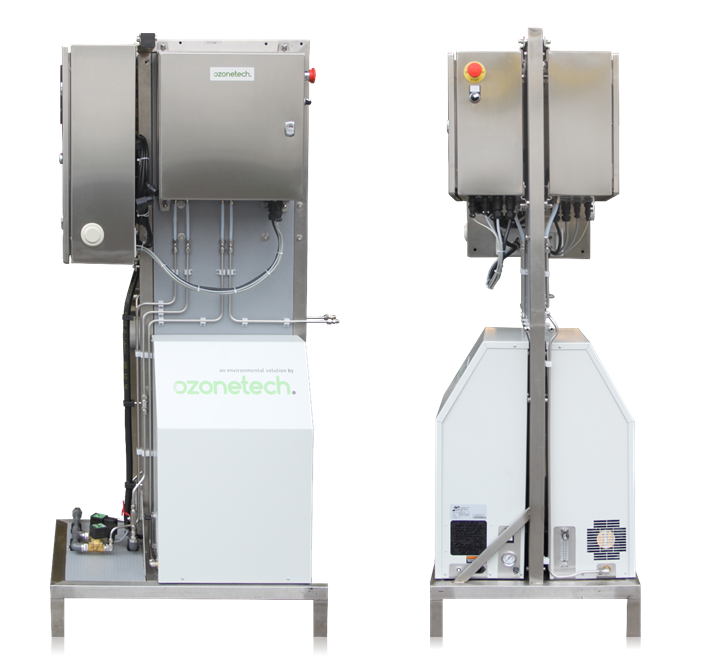
Due to the ongoing global Coronavirus pandemic outbreak (announced by World Health Organization, WHO), we have rapidly rerouted our production and product development into overdrive-mode for the past two weeks, and have managed to create a dedicated deployment team. This has resulted in an advancement of our already effective RENA Pro C-series, with upgraded features and capacity which enables:

 rena pro c sammanstallning 0

  • Quick dispatch of ozone systems to world-wide infection zones
  • Higher degree of SARS-CoV-2 inactivation monitoring through and integrated online ozone concentration      measurement module with a tailored human-machine interface
  • Standard option package with injection spear into ventilation systems for prevention of virus dissemination

 Please contact us now to find out how we can help to combat COVID-19.


This article is written by or on behalf of a member of the network and any statements, claims and opinions are theirs and not necessarily NCSH's.

Reprocessing and Remanufacturing of Medical Devices

The EU Ushers in New Era in Reprocessing and Remanufacturing of Medical Devices Labelled for “Single Use”

Published by: Daniel J. Vukelich, President at AMDR - Association of Medical Device Reprocessors.


AMDR external newsLooking to understand the new EU rules for medical devices (“EU MDR”)? Check out the European Commission’s “Fact Sheet for Healthcare Professionals and Health Institutions.” The new regulation was adopted in May 2017. A three-year transition period ends in May 2020, meaning device companies and authorities need to be compliant by then.


The EU MDR allows for the reprocessing of SUDs if it’s also permitted under national law and in compliance with Article 17 of the EU MDR. That means, in addition to meeting medical device manufacturer requirements as outlined in the MDR, each EU member must permit such products under national law. AMDR is urging members to “opt in,” meaning, to elect to allow remanufactured SUDs that are CE marked – meaning they conform to the EU MDR’s requirements. Belgium and the Netherlands have already taken steps to do so and have reported such to the Commission. AMDR is in touch with numerous other Member States taking action, including Germany, Ireland, Portugal, Slovenia and the UK.


Opting into Article 17 of the EU MDR promotes safety. Article 17 gives Ministries of Health authority to stop any inappropriate SUD reuse of single use devices that may be happening in hospitals and promote only safe, regulated SUD reprocessing and remanufacturing. Patients deserve to know that all devices used on them meet the same standards. Countries that opt in will promote competition and drive down costs. Allowing CE marked remanufacturing of SUDs provides governments a useful tool to combat growing medical device costs as remanufactured devices can be, on average, 30 percent less expensive than buying new. In 2018, hospitals that used safe, regulated reprocessed devices saved over US$470 million. These savings will only grow annually in the EU thanks to the MDR. Medical device manufacturers have also been known to lower their prices for new equipment when faced with economic competition from reprocessors.


Countries that opt in will also reduce medical waste. Article 17 addresses the environmental consequences of our “disposable” healthcare culture. Incineration of healthcare waste leads to pollutants in the air that can make people sick. Healthcare should not be making our patient populations sicker. Further, healthcare waste is expensive to dispose of, and by reprocessing and remanufacturing, hospitals save additional money in waste hauling fees.


AMDR member reprocessors meet medical device manufacturer standards, as required by law. As with any novel technology, there is sometimes resistance by the established industry. Reprocessors are not asking they be cut any corners – they will demonstrate their products meet the EU MDR’s requirements and include voluminous data supporting their cleaning, design/functional performance and disinfection and sterilization validations in their required submissions to regulators. The EU MDR’s placing of SUD reprocessing as a manufacturing activity solves legal, regulatory, safety and fairness issues. If all would-be SUD reprocessors are placed on a level playing field, we know that all devices, new, reprocessed or remanufactured, are safe and effective for patients. We ensure that SUD reuse in hospitals, or another non-confirming reuse, is stopped. OEMs are not held responsible for commercially reprocessed devices, and know their competitors are being held to the same standards. With these principals in place, reprocessors are eager to enter the various Member State markets, lowering medical device costs and reducing medical device waste.


This article is written by or on behalf of a member of the network and any statements, claims and opinions are theirs and not necessarily NCSH's.

Fossil free energy system saves millions for healthcare

Our network member Energy Machines have published an article about a fossil free energy system. You can read the full article below! 


An integrated energy system, recycling and transferring heating and cooling to where it is needed in the building, brings several benefits to hospitals. A reduced carbon footprint, a robust system in case of crisis, and funds made available for healthcare.

Energy Machines provides a turnkey solution, combining heat pumps and a control system with underground thermal energy storage.

 SISTA

Saving heat from summer to winter

The solution has been implemented at the University Hospital of Umeå. With premises covering more than 300,000 square metres, requiring heating and cooling all year round, the hospital needed a large-scale system with an intelligent approach to energy recycling.

”Our solution is based on a ’Robin Hood principle’: the surplus is moved to where there are deficits,” says Thomas Göransson, business manager at Energy Machines.

Energy Machines’ solution was 125 boreholes reaching a depth of 250 metres, offering extensive thermal energy storage for seasonal use. The system can save excess heat from hot summer months in the bedrock and make use of it in the winter, and vice versa.

Vital for climate objectives                                                                                                         

Since buildings account for 35 percent of global CO2 emissions, choosing the right energy system is a vital part of reaching the sustainable development climate objectives of the EU and UN.

Energy Machines’ solution minimizes the hospital’s energy usage and decreases its CO2 emissions. It also brings considerable economic savings.

“Before, we paid for our energy three times, buying district heating, district cooling and electricity separately. Now, we simply buy electricity to power the heat pumps and can utilize all the energy found in the building,” says Jesper Burlin, the hospital’s technology coordinator.

More money for healthcare

The energy system saves the hospital SEK 3.6 million per year – money that can now be invested in patient care and research.

The system also increases the robustness of the hospital, since it can produce energy on-site in case of crisis. Certain medical equipment and spaces, like x-ray machines and operating rooms, are very temperature sensitive – as are certain patients. A controlled indoor climate is crucial.

”It was a tremendous help during the heatwave last summer. We had much higher capacity for cooling the hospital’s premises than before,” says Jesper Burlin.

Here you can watch the video (insert link to https://vimeo.com/360488775) showing Energy Machines’ solution at the University Hospital of Umeå.


(Facts section:)

• In general, healthcare places high demands on indoor climate. Certain instruments and spaces are very sensitive to temperature change and backup systems are needed for heat, cold and water.

• An aging population poses demands on more advanced and expensive care. Therefore, it is vital from a socio-economic standpoint that healthcare is run as resource-efficiently as possible. Energy savings are of great importance.

• Buildings account for 35 percent of global CO2 emissions and health care providers are major property owners. In order to meet the sustainable development climate objectives of the European Union and United Nations for 2030 and 2050, it is necessary to cut the energy consumption for the property management sector.                                                                                                                                                                                                                                                                           

This article is written by or on behalf of a member of the network and any statements, claims and opinions are theirs and not necessarily NCSH's.

Priority Investment - White paper by Siemens Financial Services

Our member Siemens recently published a White paper. The new research identifies three priority areas for investment in digital transformation in healthcare. 


Top investment areas for digital transformation in healthcare, the size of the investment challenge, and how to manage that challenge.

A Siemens Financial Services (SFS) Insight Series, November 2019

Key Messages 2

From the summary: 

Ageing populations, changing lifestyles and diets, rising levels of chronic complaints such as diabetes, cancer and heart disease, are rapidly increasing the pressure on healthcare systems around the world. The digitalization of healthcare provision is widely becoming acknowledged as an enabler to cope with this rising demand, improving patient outcomes, but without incurring escalating costs.

Healthcare experts globally, responding to the latest SFS Insight Study, identified three priority areas for investment in digital transformation – each of which they judged to hold the highest potential for rapid positive impact on pressurized healthcare infrastructures and operations. To fail to invest in these key areas of digital transformation is therefore to fail to realize important benefits in healthcare systems, whether in terms of improved patient outcomes, operating efficiencies, or access to personalized precision medicine. The top three enabling technology investment areas highlighted by respondents, were:-

1. New generation (digitalized and/or mobile) diagnostics

2. Remote access and communications platforms (Telemedicine)

3. Smart, digitalized hospitals

Digital transformation, however, in these three priority areas, requires considerable capital investment – typically beyond normal capital budgets available to healthcare providers. The research conservatively estimates the global ‘investment challenge’ over a five year period for these three investments alone to be:-

• New generation digitalized diagnostic imaging - $64 billion

• Telemedicine - $79 billion

• Smart hospitals - $72 billion

Given that capital spending budgets in healthcare around the world are typically around 5% of total operating budgets, such a scale of investment is not typically within the capabilities of normal funding levels. Moreover, if healthcare systems were to buy the technology required for digital transformation outright, this would tie up a high proportion of funds which are needed for urgent operating expenditure. Such levels of ‘frozen capital’ are unlikely to be viable or sustainable in today’s pressurized healthcare environment. Healthcare organizations are therefore increasingly relying on specialist private sector financing tools to help manage the digital transformation and in so doing realize the benefits of improved patient outcomes and increased efficiency faster.

Deploying private sector capital to acquire the necessary technological and equipment base allows digital transformation to be achieved without ‘freezing’ unacceptable levels of funding. Specialist providers, working closely with the sector, are employing knowledge of the technologies involved to adapt and update financing solutions to match each healthcare organization’s financial situation, digitalization goals and offer a sustainable means achieving digital transformation.

Download the white paper here


This article is written by or on behalf of a member of the network and any statements, claims and opinions are theirs and not necessarily NCSH's.

An antimicrobial protection of natural origin

The Japan Times has published an article about a natural and non-toxic antimicrobial protection which is not harmful to the environment. The protection can be used on for example fabric in the medical industry. Below we have posted a summary of the article, a link to the full text can be found at the bottom of this page. 


Nordic BioTech Group offers groundbreaking antimicrobial protection globally

Nordshield linear CMYK black

NordShield is a revolutionary antimicrobial innovation developed by the Nordic BioTech Group Ltd, which was established 2016 in Helsinki, Finland. Earlier this year NordShield received the Sustainable Healthcare Innovation Award by the Nordic Center for Sustainable Healthcare.

NordShield innovates the way antimicrobials work by offering a natural alternative for hazardous antimicrobial substances. The technology forms a bioactive molecular net on treated surfaces, providing safe and long-lasting antimicrobial protection, that is highly effective against mold, bacteria and viruses, and therefore very useful in medical industries.

The renewable product is of natural origin, making it non-toxic and non-harmful to the environment. It can be applied through patented water or solvent solutions, as well as through ointments and liniments, making it useful for a wide variety of industries. The technology has shown good antimicrobial efficacy, including enveloped viruses, specifically HIV, hepatitis B and hepatitis C. Hand-in-cage studies conducted in Bangalore, India, have also shown that treating textiles with NordShield provide high mosquito repellent efficacy.

Nordic BioTech Group partners with organizations around the globe to develop applications for NordShield. Third-party partners in Finland, Sweden, Germany, France and Japan, among others, are continuously conducting tests.


Read the full article here >>>


This article is written by or on behalf of a member of the network and any statements, claims and opinions are theirs and not necessarily NCSH's.

Quantifying the sustainability effects of healthcare

Recently, we got a new article sent to us about quantifying the sustainability effects of healthcare. Below we have posted a summary of the article, a link to the full text can be found at the bottom of this page.

A new approach to quantifying the sustainability effects of healthcare: Applied to the diabetic foot. 

By Stefan Hellstrand and Ulla Hellstrand Tang.

 exter

A vital role for any society is to deliver health care considering: 1) the planetary boundaries, 2) the complexity of systems and 3) the 17 sustainable development goals (SDGs). The aim is to explore the feasibility of a method to quantify the sustainability effects in health-care services. A toolbox was explored in the prevention and care of foot complications in diabetes. People with diabetes run the risk of developing foot ulcers and undergoing amputations.

Three relationships between ecosystems and human health and health-care systems were identified as: (i) The economic resources for health care have previously appropriated ecological resources in the economic process. (ii) Health-care systems consume natural resources. (iii) Ecosystems and the landscape affect human well-being.Some types of landscape support human well-being, while others do not. This category also includes the impact of emissions on human health.

Diabetes is one of the non-communicable diseases with high mortality and foot complications. With health-promoting interventions, the risk of developing foot ulcers and undergoing amputations can be halved. The toolbox that was used could manage the complexity of systems. Several of the 17 SDGs can be calculated in the prevention of complications in diabetes: quality of life improves, while the costs of healthcare and the burden on the economy caused by people not being able to work decrease. The appropriation of natural resources and the wasted assimilated capacity for the same welfare level decreases, thereby offering an option to deliver health care within the planetary boundaries. 

Read the full article here


This article is written by or on behalf of a member of the network and any statements, claims and opinions are theirs and not necessarily NCSH's.

Life Cycle Assessment of the insertion kit for central venous catheters

Region Skåne recently published a report on the environmental impact of single-use products compared to reusable products in the healthcare sector, written by one of their student employees Nathalie Wessberg. 

Can a transition to multiple-use articles reduce the environmental impact of healthcare? A life cycle assessment of the insertion kit for central venous catheters 

NyhetThe increasing awareness of resource depletion has led to a growing interest in adapting a more efficient use of resources within multiple sectors to support a more sustainable development. One sector that uses large amounts of resources, with the high use of comsumables, is the healthcare sector. 
 

The results of this study show that the resource use can be decreased by using reusable products when suitable, adapting the content of custom packs, and implementing strategies to reduce the amount of waste produced. The life cycle assessment indicates that a transition to using central venous catheter insertion kits containing several reusable products can reduce the environmental impact for all of the investigated categories except water depletion. This transition can for example reduce the resource use by fifty percent. The alternatives containing reusable products also had a lower total cost of ownership, when compared to the central venous catheter insertion kit containing only single-use products. 


In conclusion, the recommendation for the intensive care unit at the hospital in Helsingborg is to use the first alternative for central venous catheter insertion kit, which contains four reusable products, to reduce their environmental impact as well as their purchasing costs. 

Read the report here >>


This article is written by or on behalf of a member of the network and any statements, claims and opinions are theirs and not necessarily NCSH's.


Sustainable operating rooms and ICU at Helsinki University Hospital

Our network member HUS (Helsinki University Hospital) recently pulished new videos on their youtube channel focusing on sustainable healthcare.


HUS external news1The videos are all made by the staff at Helsinki University Hospital, and the "actors" in the videos are also staff members. The videos are made to spread knowledge about sustanability within healthcare, and each video is focusing on a specific area within healthcare where work can be, or has been, done to improve sustainability.

The focus areas in the videos that has been published so far, are: Reusable towels, printing paper, recycling plastics, single-use work clothes and the use of multiuse devices to empty suction bags. In one video, for example, they describe how they at Peijas Hospitals ward K are using a disposable device to empty suction bags. With this device, they can safely dispose difficult waste right where it was produced. Therefore, there is no need to pack and transport the waste to be burned elsewhere, which reduces the their carbon footprint and helps the environment. 

To watch the videos, click here >>

hus


This article is written by or on behalf of a member of the network and any statements, claims and opinions are theirs and not necessarily NCSH's.


Address

Nordic Center for Sustainable Healthcare
Medeon Science Park
Per Albin Hanssons väg 41
205 12 Malmö
Sweden

Detailed contact information →

NCSH logo

Contact us

Eager to know more about the Nordic Center for Sustainable Healthcare and what we can offer you?


+ 46 (0) 40 606 55 80

TEM logo

Part of Stiftelsen TEM since 2015.

Our digital hospital

Grønnköpingkið, the greenest hospital in the world. Visit worldsgreenesthospital.org

Follow NCSH

Follow us on YouTubeFollow us on LInkedIn Subscribe to our newsletter