Results - Floow2's pilot among pharmacists

Our network member Floow2 have released the results from a pilot they did among pharmacists to reduce medication wastage. Below you'll find what they said about the results!

Medicine Marketplace saves thousands of Euros'

Wastage of medication is a hotly debated issue that primarily relates to packages returned by patients. It is estimated that in the Netherlands alone, we throw away at least 100 million Euros’ worth of medicines every year. Besides patients, pharmacies and suppliers also regularly have to deal with leftovers and wastage.
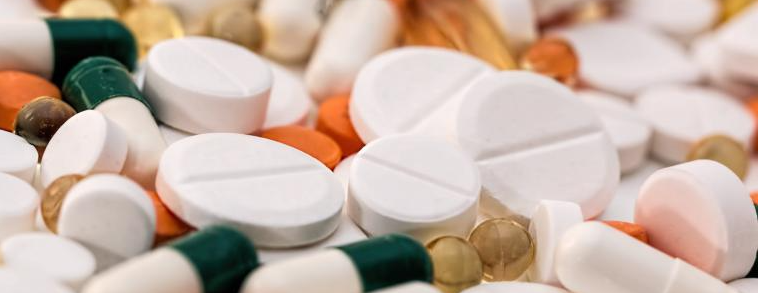
 

MedicijnenIn the latter case, we are referring to medication that has been retained and stored according to the applicable rules and legislation and is still of high quality. These medicines are eventually discarded by the pharmacy and destroyed after the expiration date has passed. The production of medicines is one of the most ecologically harmful processes in healthcare, so the destruction of good quality products leads to increased environmental pressure, contributes to unnecessary waste of resources and leads to an unnecessary increase in the costs of healthcare. This type of  medicine wastage is often overlooked as most research is primarily focused on patients. 

Sharing Marketplace

PharmaSwap is a unique sharing marketplace for pharmacists, hospital-based or otherwise, that creates transparency in the supply and demand for expensive medicines. By connecting supply and demand in a professional manner, participating pharmacists aim to reduce wastage of medicines that would otherwise remain on the shelves of the pharmacy, wholesale organization or pharmaceutical company only to end up passing the expiration date. It is exclusively meant for medication that was never issued to a patient and has always remained under the strictly controlled storage conditions legally imposed on pharmacies. Moreover, the shipment of traded goods through PharmaSwap is organized in a safe, GDP compliant manner to guarantee safety and quality at every stage.

Circular procurement

By focusing on medication that has consistently been stored under professional conditions within the pharmaceutical chain, huge cost savings can be made and circular practices are introduced: fewer products, and consequently resources, have to be destroyed and fewer demands are placed on resources and energy supplies for the manufacture of new medicines. As such, this sharing marketplace perfectly fits a circular procurement policy.

Results

20 pharmacists took part in a pilot conducted over the past few months. As a result of this pilot, the destruction of 68 packages was avoided; instead they were re-issued to patients. These 68 packages represent a total procurement value of Euro 54,000. With 2,000 pharmacies in the Netherlands alone, these results indicate the magnitude of the circular impact PharmaSwap can achieve if rolled out on a large scale.

 Floow2


This article is written by or on behalf of a member of the network and any statements, claims and opinions are theirs and not necessarily NCSH's.
Life Cycle Assessment at Paxxo

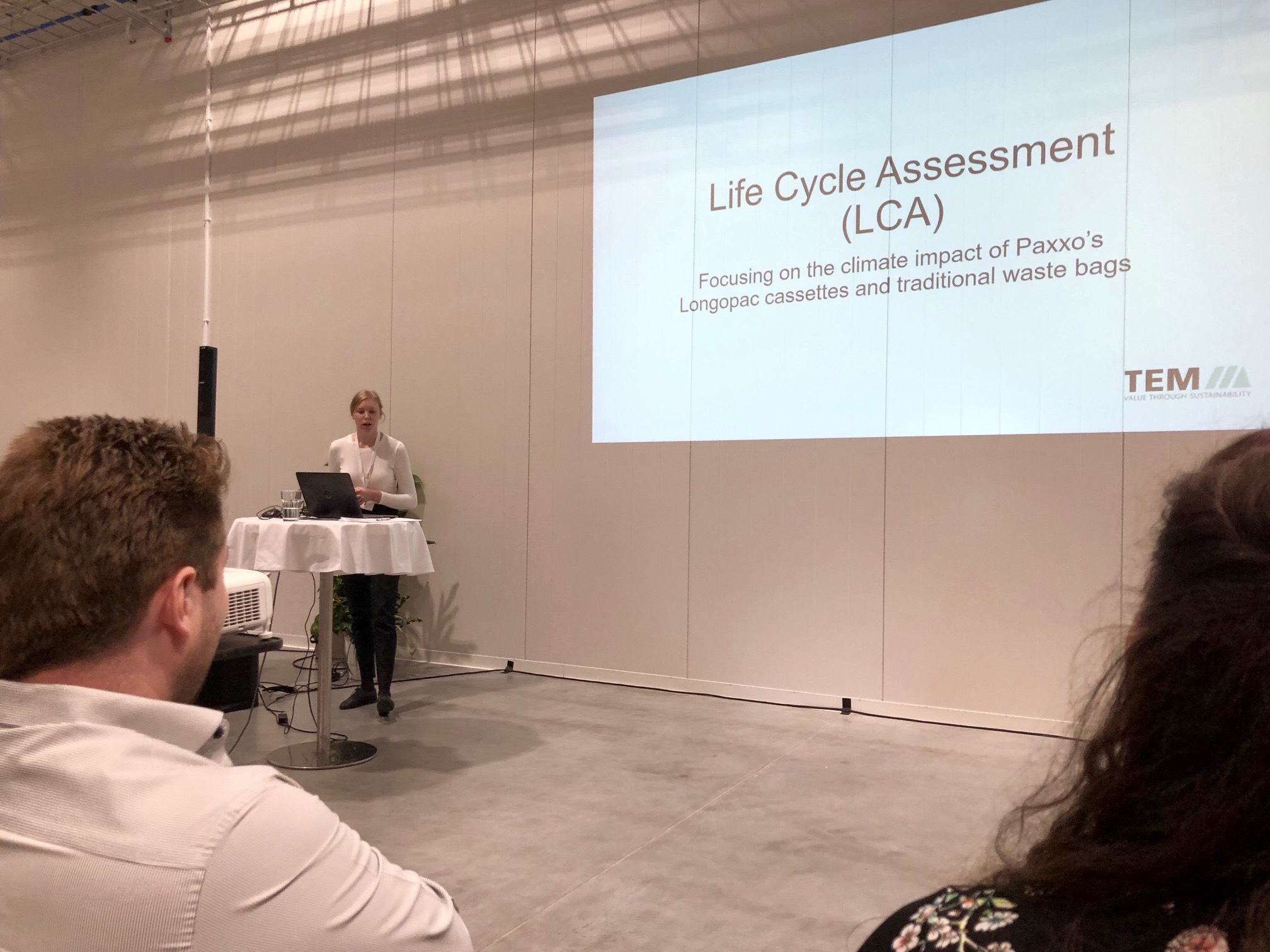
Life Cycle Assesment, focusing on the climate impact of Paxxo’s Longopac cassettes and traditional waste bags.


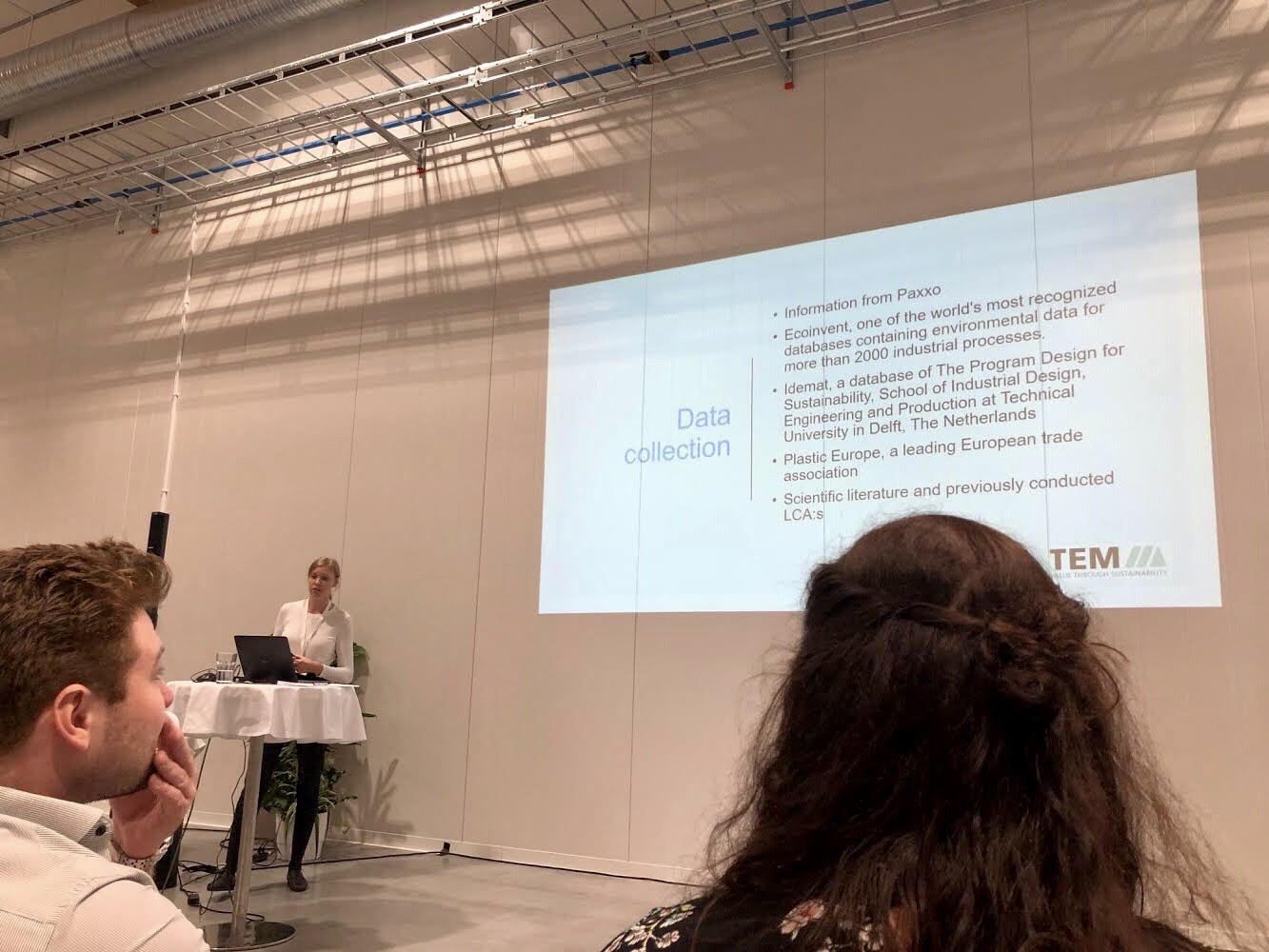
Paxxo Partner Meeting 2019 took place in Malmö, Sweden. Partners from all over the world joined them for an annual two-day event filled with presentations, group seminars and real case references. Linn Grundtman from TEM, in cooperation with Nordic Center for Sustainable Healthcare, was one of the speakers and presented an Introduction to the Life Cycle Analysis. Linn introduced how the study on Paxxo's plastic waste bags had been operated, and what the study mainly focused on. The Life Cycle Analysis sheds light on the process of a product and its impact on the environment throughout the products life cycle. The results of the study can be found here >>


 Paxxo LinnImage 6 1


This article is written by or on behalf of a member of the network and any statements, claims and opinions are theirs and not necessarily NCSH's.

Human Centric Lighting seminar - October 24

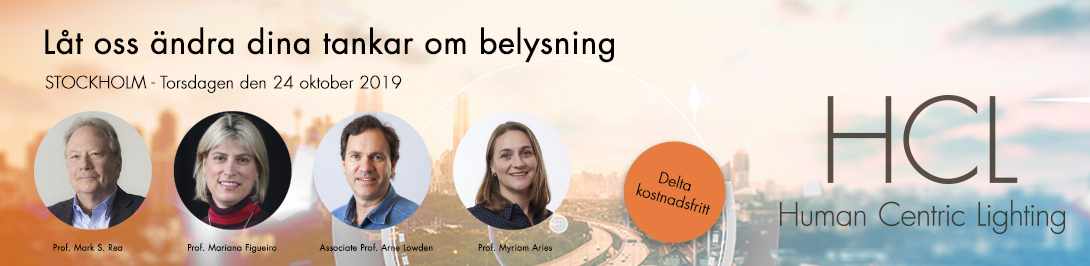
Did you know that light affects our sleep, performance and wellbeing?

On October 24, Glamox is hosting a free seminar in Stockholm on the latest news and findings in Human Centric Lighting.

Glamox has invited some of the world's foremost researchers in Human Centric Lighting to talk about non-visual effects of lighting and the way forward to recommended practices. We welcome you to listen to some short, interesting lectures on Human Centric Lighting and lighting control systems and watch demonstrations of how it can be used in practice. A light lunch is served before we continue with the evening seminar.

The event takes place at Nordic Light Hotel, centrally in Stockholm. After the evening seminar, we invite you to a three-course free dinner at the hotel restaurant.


What will you get out of this event?

  • An opportunity to meet, learn, discuss, share and/or network
  • Light lunch and short lectures on Human Centric Lighting and lighting control systems
  • Learn about and see some methods used
  • Learn more about Human Centric Lighting of the world's foremost researchers in the subject at the evening Seminar
  • Network Dinner you get the opportunity to meet other colleagues in the industry and share ideas, successes and challenges over a three-course free dinner.

Fill in the booking form already today. Limited number of seats!

Link to form >>

Ljuskultur banner HCL SE 1090x266px


This article is written by or on behalf of a member of the network and any statements, claims and opinions are theirs and not necessarily NCSH's.
New report provides first-ever estimate of healthcare’s global climate footprint, calls for zero emissions

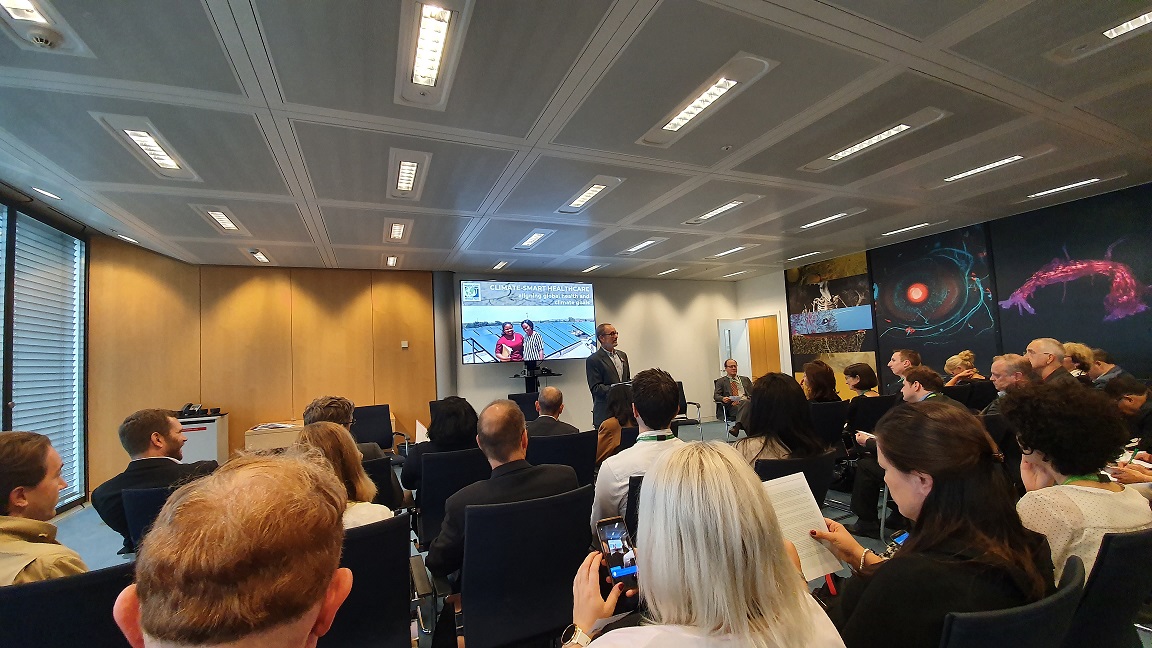
This tuesday, NCSH participated in a high-level panel event hosted and moderated by the Wellcome Trust in London.

At this event, a new report by Health Care Without Harm, in collaboration with Arup, was launched. The Panellists at this event included Deputy Chief Medical Officer for England Dr Jenny Harries OBE and Mandeep Daliwhal, Director of UNDP's HIV, Health, and Development Group, as well as representatives from WHO, NHS, and authors of the report.


A short summary of the report:

20190910 153649 1

The report shows that healthcare’s global climate footprint is equivalent to 4.4% of global net emissions (2 metric gigatons of carbon dioxide equivalent) and well over half of healthcare’s global climate footprint comes from fossil fuel combustion. The GHG emissions of the global healthcare sector are equivalent to that of 514 coal-fired power plants and, as the third largest emitter, the EU healthcare sector accounts for 12% of the global healthcare climate footprint. More than half of healthcare’s worldwide emissions come from the top three emitters – the EU, the USA, and China. If the global healthcare sector were a country, it would be the fifth-largest greenhouse gas (GHG) emitter on the planet. 


The report also outlines immediate actions that stakeholders from across the health sector should take, including: 

  • Hospitals and health systems should follow the example of thousands of hospitals already moving toward Climate-smart Healthcare via the Health Care Climate Challenge and other initiatives.
  • National and subnational governments should build on existing initiatives to establish action plans to decarbonise their health systems, foster resilience, and improve health outcomes.
  • Bilateral aid agencies, multilateral development banks, other health funding agencies and philanthropies should integrate climate-smart principles and strategies into their health aid, lending, and policy guidance for developing countries. 

The report concludes that health promotion, disease prevention, universal health coverage, and the global climate goal of net zero emissions must become intertwined. 

For more information about the report, visit noharm.org/ClimateFootprintReport.


This article is written by or on behalf of a member of the network and any statements, claims and opinions are theirs and not necessarily NCSH's.
EU Action Needed to Reduce Costs and Environmental Impact of Healthcare

This article is written by or on behalf of a member of the network and any statements, claims and opinions are theirs and not necessarily NCSH's. 


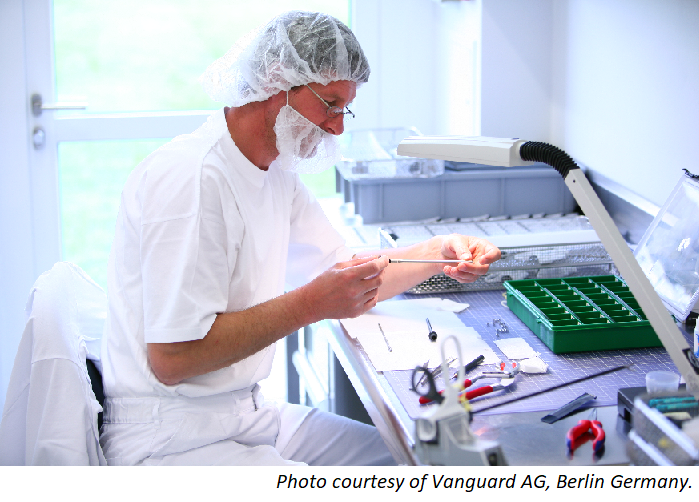
amdrrOn Tuesday, 20 August 2019 the European Commission closed its feedback period on safety and performance requirements for single-use device reprocessing. As the 26 May 2020 deadline for compliance with the new European Medical Device Regulation looms, we have arrived at a critical moment as European Member States now have sufficient information to safely reduce costs and “red bag” waste by adopting standards that will expedite single use device remanufacturing.

Hospitals worldwide have safely used millions of regulated, remanufactured, single use devices (SUDs) to drive down costs and waste. With the passage of the European Union (EU) Medical Device Regulation (MDR) in 2017 and the publishing of the European Commission’s long awaiting Implementing Act laying down the rules, or Common Specifications, for single-use devices that are reprocessed and used within a health institution, European hospitals now have a path to access to safe, regulated, remanufactured SUDs.

Healthcare providers looking to have access to environmentally preferable and lower-cost medical device options must now urge their Ministries of Health to act. Strict EU requirements for SUD reuse require that Member States elect to allow regulated SUD remanufacturing (CE marked), meaning the remanufactured SUDs meet all the same requirements as any new medical device (as outlined in 17.2 of the MDR), OR, as is outlined in the Common Specifications (pursuant to 17.3 of the MDR), decide “not to apply all of the rules relating to manufacturer’s obligations laid down in that Regulation,” in and instead elect to allow hospitals to reprocess in-house pursuant to the Common Specifications. Member States are required to  inform the European Commission which path they have taken.                                                               

The Association of Medical Device Reprocessors (AMDR), enthusiastically supports full manufacturer treatment for SUD reprocessors (or, remanufacturers) as regulation and oversight gives confidence to hospitals and healthcare providers that remanufactured SUDs are safe, effective, and benefit patients, hospitals and health systems by significantly reducing medical device costs and medical waste.

The Regulation creates a more simplified, consistent and EU-focused legal and regulatory path for hospitals that wish to reprocess. The Regulation also prohibits unregulated reuse of SUDs, giving Ministries of Health a tool to stop in appropriate and unsafe reuse of SUDs. But most Ministries have so far failed to act, and the Regulation requires that Member States “opt in,” or take affirmative legislative or regulatory action to allow CE marked remanufactured SUDs (pursuant to 17.2), or to elect to allow hospitals to reprocess according to the Common Specifications (pursuant to 17.3), or do nothing. Failure to act, however, is an effective ban on all reprocessing or remanufacturing.
Given a thorough review, any Member State seriously contemplating allowing hospitals to reprocess SUDs in house will quickly realize (as some have said in comments to the Commission) that the only proper way to reprocess is to do so with regulated remanufacturers. As is detailed in the Common Specifications, reprocessing of SUDs requires a considerable effort in addition to Notified Body oversight, and many of the requirements are simply outside the scope of what hospitals can reasonably meet.

In AMDR’s view, the new requirements for SUD reuse will have similar impact to what occurred in the USA and Germany after FDA and the Federal Ministry adopted strict regulatory controls in 2000 and 2002, respectively. There, professional, commercial remanufacturers helped hospitals save over $471 million in 2018, with no increased risk to patient safety. In-house reprocessing of SUDs virtually stopped. In addition, remanufacturers kept over 15 million pounds of medical waste from going to landfills and incinerators. Hospitals save further by reducing expensive medical waste because many medical devices can be remanufactured multiple times. Finally, as with the competition injected into the drug market by generics, the availability of professionally remanufactured SUDs has been shown to AMDR 1drive down prices for new devices.

In AMDR’s view, the new EU MDR will lead to similar cost savings and environmental benefits throughout the EU – but only if Member States opt in to allowing it. AMDR urges all healthcare professionals to urge their Ministries to act quickly to “opt in” to allowing CE marked, remanufactured SUDs.


PCS60 - A new blasting machine from OCO Nordic AB

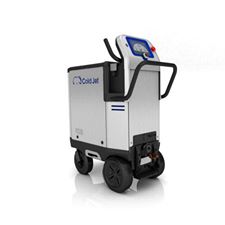
68626099 2285839001465146 1880299023915548672 nPCS60 - A new blasting machine to meet the needs of your particular facility.


Our network member OCO Nordic AB has created a new machine that creates new conditions for their services - you can say that the machine (the dry ice blast) has undergone a paradigm shift and has a greatly improved performance. Performance that is not completely untouched creates a better environmental value with more efficient use of compressed air and more efficient creation of dry ice granules for a quality cleaning suitable OCO Method™. 


For OCO Nordic AB, it is a natural factor to be at the forefront of the environmental work with their method - The OCO Method™. Therefore, they always make sure to use the latest technology. This new PCS60 blast machine creates very positive properties that allow a clear complement to their work with the environment.. a kind of symbiosis together with the OCO Method™. 


The OCO Method™

The OCO Method™ is a surface cleaning method developed for ventilation systems, climate systems, electronics and other fragile components. The method is completely free from the use of water of chemicals. The cleaning effect affects the system's functionality and energy comsumption directly - and provides omtimum results. 

 O

For more information, visit their website >> 


This article is written by or on behalf of a member of the network and any statements, claims and opinions are theirs and not necessarily NCSH's. 
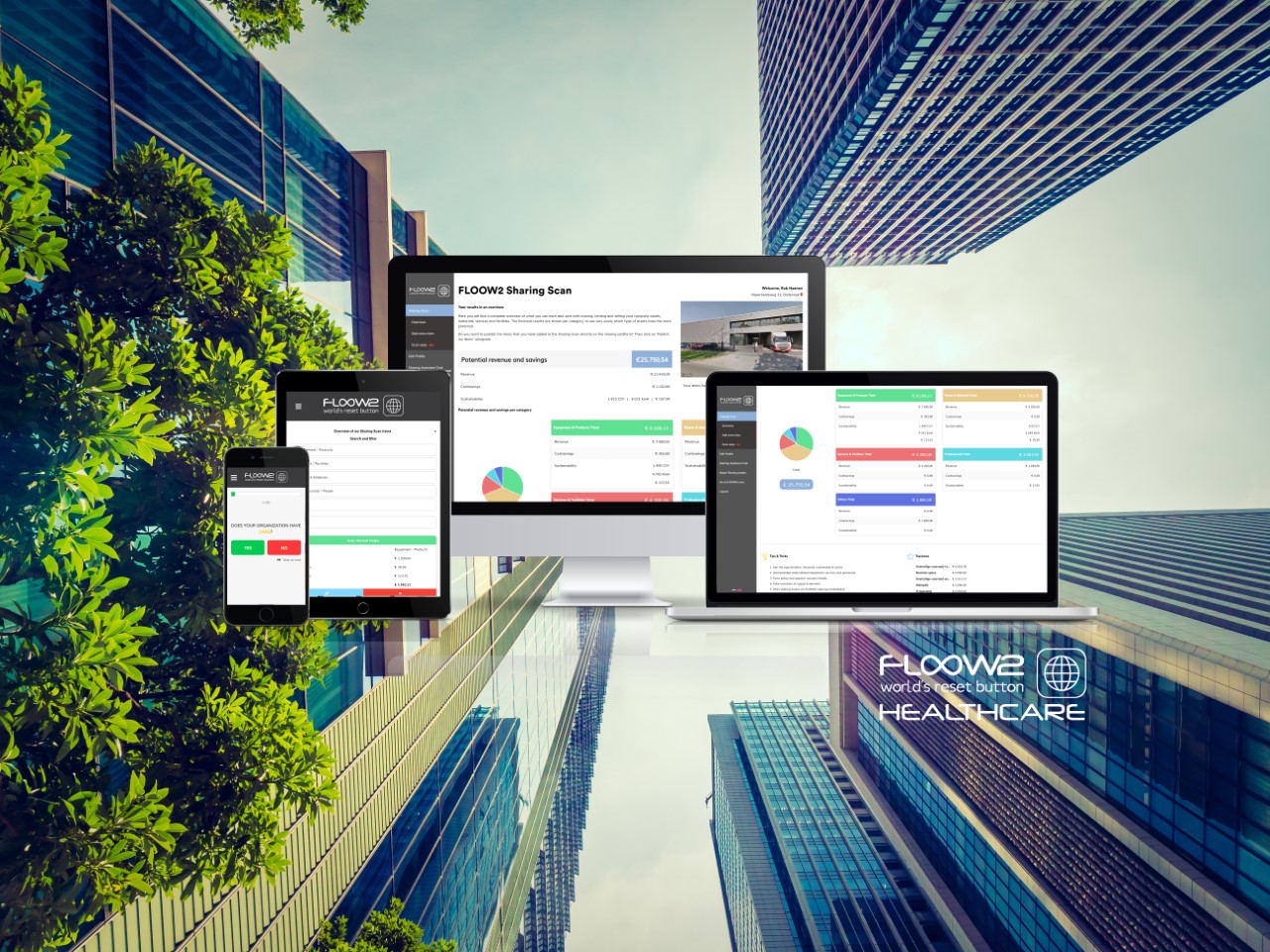
FLOOW2 has launched their new SharingScan

Floow2, world leader in facilitating the sharing economy for businesses and (healthcare) organizations, launches a SharingScan to make it possible for organizations to calculate their financial and sustainable earnings of asset sharing upfront. 


Bringing an innovative and new business model, like asset sharing, to the marktet is always a challenge. Especially when it's a business model that requires a radical mind-, behavioural and cultural shift within people and organizations. Since the launch of FLOOW2 Healthcare in 2012, they have been telling and convincing decision makers, sustainability managers and purchasing managers within organizations that FLOOW2, or asset sharing, brings them financial, social and sustainable benefits. The first question which they got back each time, was: "How much money does it save me and do you have examples and results of other businesses?" Which is understandable of course, because it requires quite a lot of guts, trust and leadership to transform and change your daily way of doing businesses into a future proof organization, while not knowing the outcome in advance. 

thumbnail sharing scan

Missionary work 

So, you might understand that FLOOW2 did quite some missionary work during the past years, because it's hard to proog the benefits of a concept which depends on the action of the organizations themselves (starting to share assets), before you can show results. In addition, not much research had been done into the B2B sharing economy. So, for FLOOW2 as pioneers the task was to invent the proverbial wheel themselves. 

Proof of concept

By the end of 2018 they did manage to quantify the financial results of the early adopters, thanks to an increase in users, transactions and internal sharing platforms. They analyzed the data of all active accounts, which showed that, for their company or community, active users produced and average financial value of €2,235 per user. For FLOOW2 Healthcare (hospitals and care organizations) this average value per active user amounted to €3,052.

Insights in financial and sustainable potential upfront

From toady they're also able to show businesses and (healthcare) organizations upfront what they can earn or save, on a financial and a sustainable level, with sharing assets, materials, services, facilities and personnel. They developed the SharingScan that gives companies insight in the possibilities of asset sharing, which assets could generate the best ROI, and in the potential financial and sustainable results. 


The SharingScan (www.sharingscan.com) calculates within a few minutes how this new, circular business model could be beneficial for your organization, and it's free or charge. The SharingScan can also be specified and personalized for specific organizations, sectors or branches. FLOOW2 can of course support you in carrying out a SharingScan. 

Contact FLOOW2 for more information and support!

This email address is being protected from spambots. You need JavaScript enabled to view it. 


This article is written by or on behalf of a member of the network and any statements, claims and opinions are theirs and not necessarily NCSH's.

Information- and cyber security, September 10

On September 10, we would lite to encourage you to go to this important lecture about information- and cybersecurity organised by the Swedish Energy Agency. 

The Agency works with many efforts to help small and medium-sized enterprises to expand on both national and international market, and would like to give you the opportunity to invite companies in your network to this lecture. The lecture is addressed to Swedish small and medium-sized enterprises related to the energy sector, considering internationalisation, which is initially in the field of information and cyber security. Swedish small and medium-sized enterprises with their often relatively scarce resources can be particularly vulnerable, especially when many holding qualified IP and expertise. As part of the Energy Agency's promotion of business internationalisation, swedish small and medium-sized companies are offered a lecture by leading expertise in cybersecurity. 

The lecture will be held by experts from the cyber department on the national defence Radio establishment and will, among other things, focus on what information to protect and different strategies for dealing with cyber threats. There will also be time for a short question and answer session.


Last day for registration is on tuesday, August 27. 

Read the full invitation and register here >>


Date: 10 september 2019

Time: 09:30 – 12:00, coffee from 09:15

Place: Swedish Energy Agency, Gredbyvägen 10, Eskilstuna. 

Setup: Two 45-minute workouts where the first deals with what is protection-worthy information and the other pass deals with strategies for dealing with various cyber threats. The lecture ends with a Question time and then lunch is served.


This article is written by or on behalf of a member of the network and any statements, claims and opinions are theirs and not necessarily NCSH's.


High level business delegation to Denmark

Copenhagen, 16-18 September 2019

We are happy to invite swedish companies to participate in a high-level business delegation to Copenhagen, Denmark on 16-18 September 2019.


Business Sweden is arranging this high-level delegation, in conjunction with the Royal visit, of HRH the Swedish Crown Princess Victoria and Prince Daniel to HRH the Danish Crown Prince Frederik and Princess Mary. The visit will take place in Copenhagen on the 16-18 of September and coincides with Dansk Industri's annual summit to which the business delegation is invited, providing a unique opportunity to meet Denmark's industrial ald political leaders and gain valuable insights into the important neighbour market. The minister for Infrastructure and Transport, Tomas Eneroth, with be attending the delegation.

Read the invitation here >>ladda ned


This article is written by or on behalf of a member of the network and any statements, claims and opinions are theirs and not necessarily NCSH's.

Grand opening of a new production hall at Paxxo in Malmö

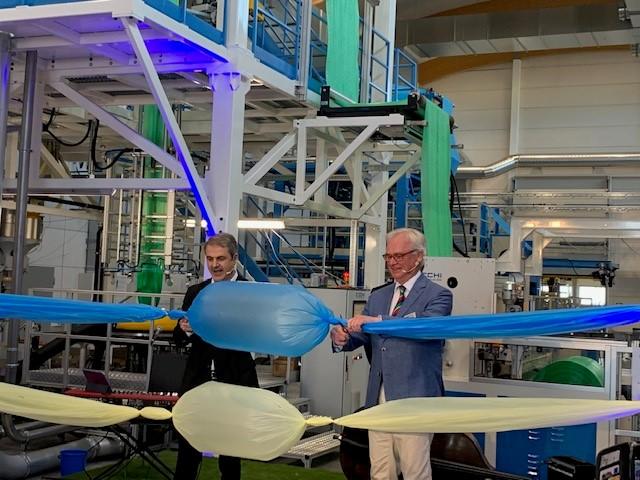
On the 20th May, Paxxo celebrated the grand opening of the new production hall in Malmö, Sweden. The Swedish Minister of Entreprise Mr. Ibrahim Baylan and the founder of Paxxo, Mr. Carl-Hugo Péters held the golden scissors in the ceremony to open the new hall. The managing director Henrik Péters spoke of his memories of the first production hall 35 years ago. The new hall includes about 1350 square metres of production area.

Read more at www.paxxo.se


Paxxo invigning


This article is written by or on behalf of a member of the network and any statements, claims and opinions are theirs and not necessarily NCSH's.

New segment – external news

Under this new segment we will publish relevant news from members and other stakeholders relevant for our members. If you are a member and have something we should write about, please send an e-mail to This email address is being protected from spambots. You need JavaScript enabled to view it. with text, photo and if relevant a link.

Examples of relevant news could be:

  • A new product that significantly reduce environmental impact.
  • A new sustainability report from a hospital.
  • A new project within healthcare sustainability.
  • A delegation visit
  • A conference
  • A new market, new significant client
  • New criterias for procurement
  • A new report with relevant focus.
  • Research of interest

Address

Nordic Center for Sustainable Healthcare
Medeon Science Park
Per Albin Hanssons väg 41
205 12 Malmö
Sweden

Detailed contact information →

NCSH logo

Contact us

Eager to know more about the Nordic Center for Sustainable Healthcare and what we can offer you?


+ 46 (0) 40 606 55 80

TEM logo

Part of Stiftelsen TEM since 2015.

Our digital hospital

Grønnköpingkið, the greenest hospital in the world. Visit worldsgreenesthospital.org

Follow NCSH

Follow us on YouTubeFollow us on LInkedIn Subscribe to our newsletter